
 Win
WinVertical SaaS–Using Better Analytics to Improve Your Odds of Success

By Bob Solomon and Mike Marcus
Vertical SaaS platforms have quietly become the operating system many small companies run on. What began as point solutions for scheduling, payments, or CRM now sits at the center of daily operations, which helps explain why SMB adoption reached 59 percent in the US in 2024, up from 50 percent just two years earlier, according to BCG.
AI is accelerating that advantage. Even after the SaaSpocalypse, vertical SaaS companies still command a 25 to 30 percent premium over horizontal SaaS at comparable performance levels, a sign that the market continues to reward deep workflow ownership. SMBs are unlikely to rip out mission-critical applications or “vibe code” their own replacements, as long as incumbents keep using AI to solve the next layer of operational pain. But when that roadmap stalls, the opening for an AI-native challenger appears quickly.
The strongest vertical SaaS platforms now use AI to automate, integrate, and increasingly perform the jobs that define how these businesses run day to day. That expansion typically begins in customer-facing workflows like CRM, CPQ, receivables, and payments. From there, the roadmap naturally extends into operational systems such as scheduling, project management, and workforce coordination, before expanding further into accounting and supplier-facing back-office functions through the general ledger, accounts payable, and procurement.
The result is software that helps SMBs scale and grow more effectively while improving operational efficiency. Several durable forces have driven the category’s continued success. SMBs have become far more comfortable adopting cloud software as core infrastructure, while the best vendors have paired strong product-led wedges with a deep understanding of the industry’s hardest jobs to be done.
Distribution has widened as ratings platforms, indirect channels, and ecosystem partnerships make it easier for winners to reach fragmented markets at scale. Investor appetite has followed. As Euclid Ventures notes, across 4,395 VC financings totaling $186 billion in 2025, vertical startups captured 53 percent of deal volume and 30 percent of deployed capital. After excluding the handful of billion-dollar horizontal AI and infrastructure rounds, that share rises to 51 percent of total capital.
The best vertical SaaS strategies come down to two decisions: choosing markets with room for durable workflow ownership, and building the right wedge to expand from that foothold into adjacent jobs.
Where to Play
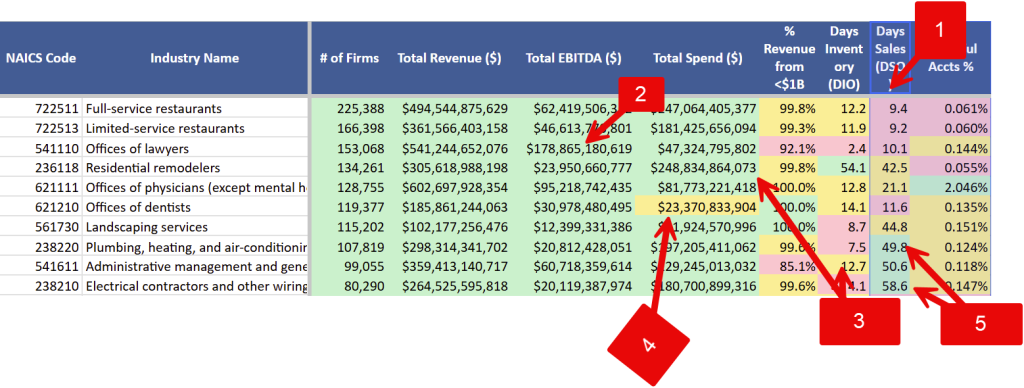
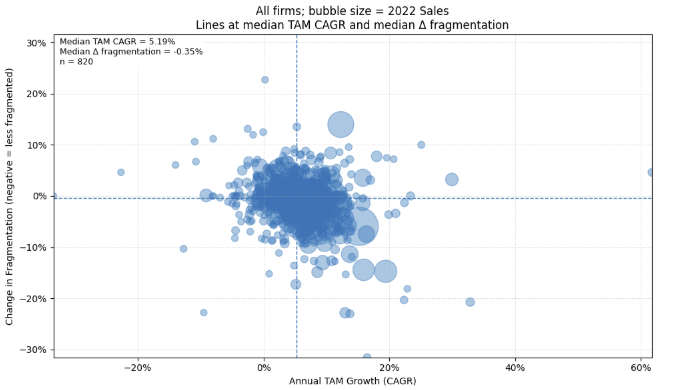
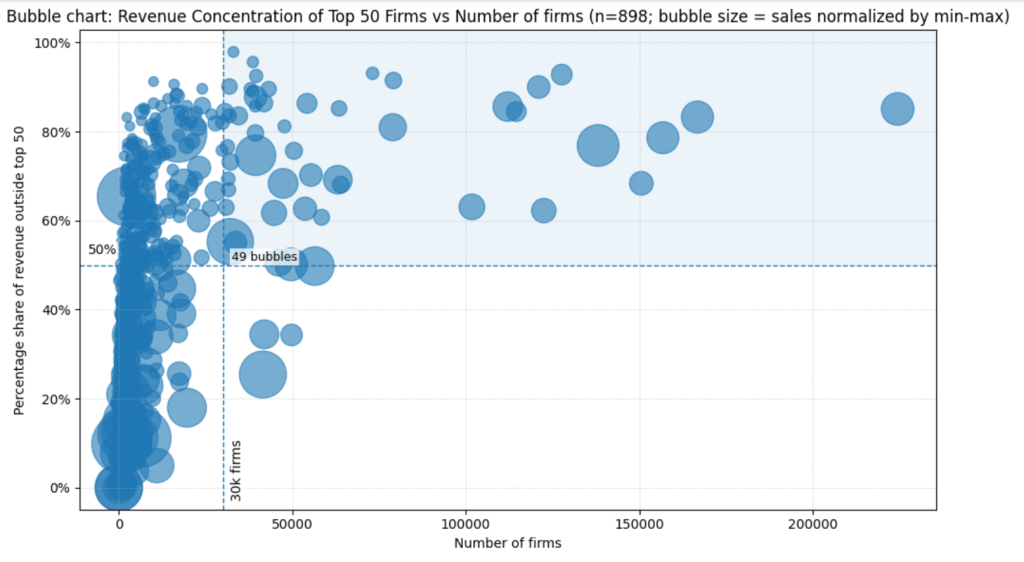
Investors have consistently found the best hunting grounds in large, fragmented markets where SMBs still hold the majority share. Census data points to the same pattern: the fertile verticals combine high firm counts with low revenue concentration, creating both a large TAM and ample room for a workflow wedge to take hold. The top 10 markets below have produced many of the category’s defining winners.

How to Win
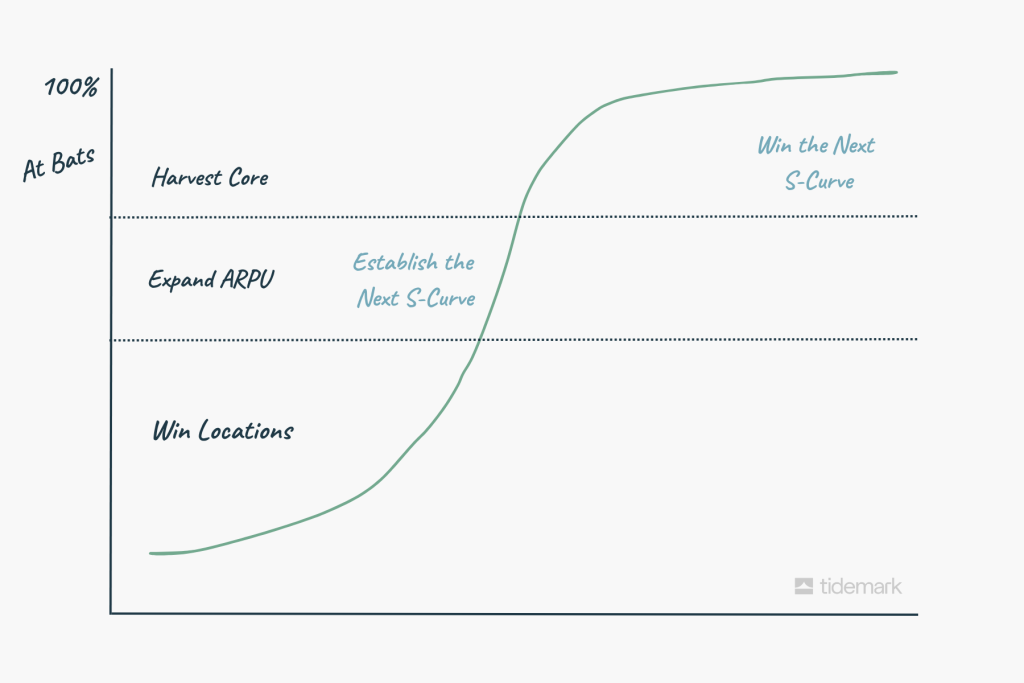
The winners in these markets have tended to follow a familiar playbook. They start with a wedge product in the middle or front office that solves a painful, high-frequency workflow, then expand across the SMB’s next most valuable jobs to be done, building what becomes a true product layer cake. From there, the roadmap often extends beyond the business itself to its customers, suppliers, or both.
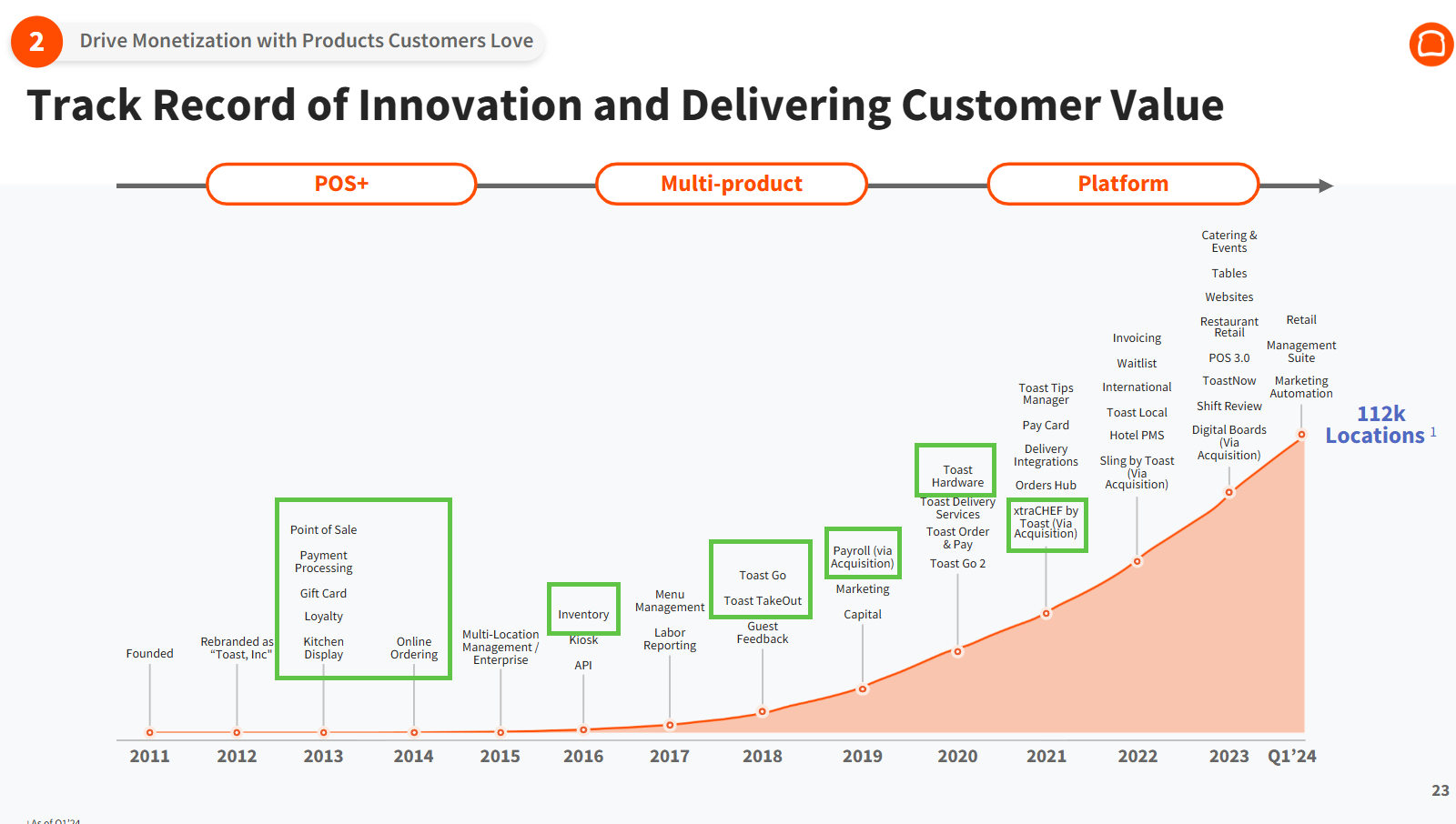
For instance, Toast followed that pattern by starting at the point of sale and closely adjacent services such as payment processing and gift cards. It later expanded into the middle of the house, with kitchen display, inventory management, and payroll, before eventually moving deeper into the back office via the acquisition of Xtrachef and invoicing, all while continuing to strengthen its front-of-house business.
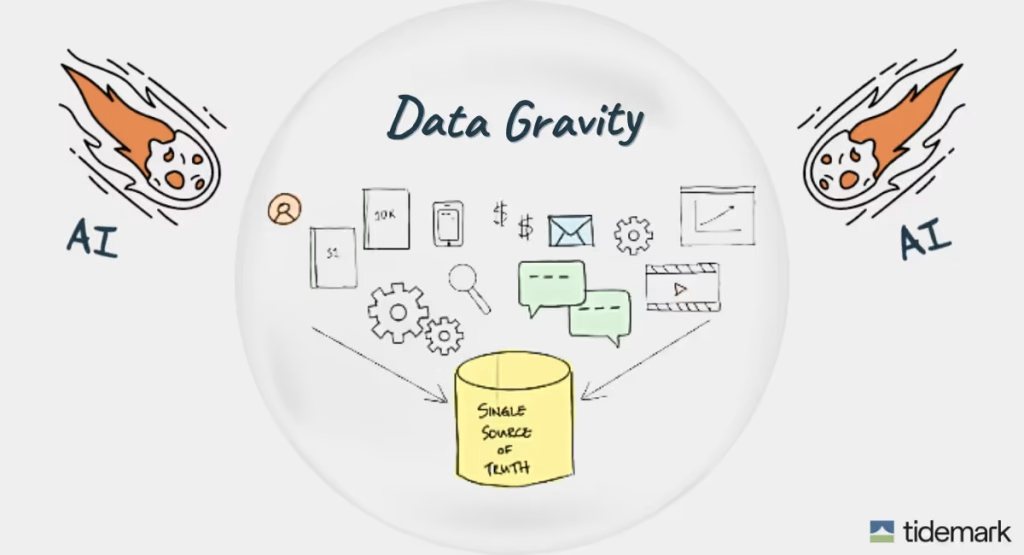
Typically, these decisions are driven by the toughest jobs to be done in a given industry and by customer pain points that surface most clearly in daily operations. Building this kind of roadmap starts with deep customer insight. However, an investor’s thesis or an operator’s next product move can become sharper when informed by detailed analytics and alternative data that reveal where the next product-market opportunity is likely to emerge.
Using data from Powerlytics*, which draws on IRS and other government data sources to provide a database of complete financial statements on 33 million US businesses, we looked beyond revenue and concentration to the signals that shape what a vertical market can support. Profitability, measured by EBITDA, indicates a market’s willingness and ability to pay for premium workflow software. Supplier spend and days inventory outstanding help surface where procurement or supply chain offerings are likely to gain traction. Long days’ sales outstanding, along with allowance for doubtful accounts, can signal that payments, order-to-cash, and broader embedded finance products, such as credit solutions, may become natural extensions of the platform.
Within the top 10 NAICS codes by number of firms, the expanded Powerlytics dataset starts to show where the next layer of product expansion is most likely to succeed.
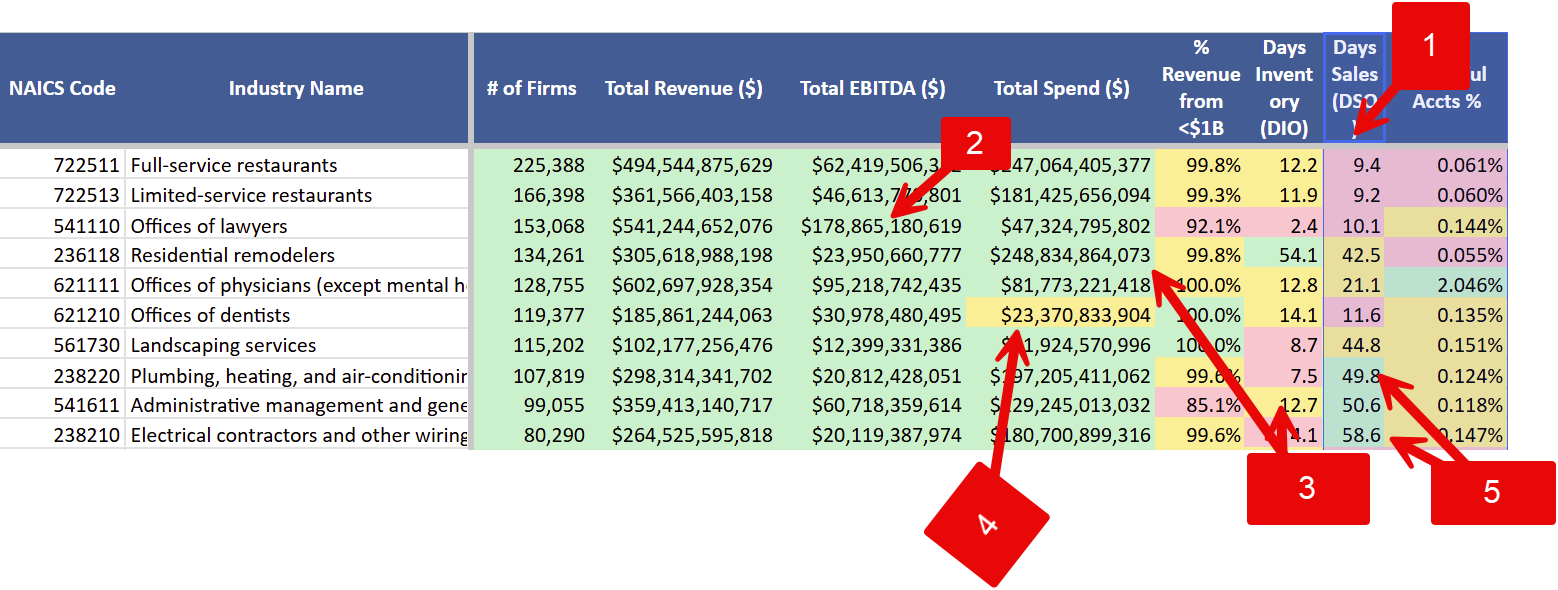
Restaurants, the top two industries by firm count, point clearly toward payments-first expansion. They are B2C markets where customers pay largely in cash and by credit card, which keeps DSO low and helps explain why Toast is a POS and payments company. Its capital products are less about factoring receivables than providing a convenient alternative to banks for renovations, equipment, opening new locations, managing cash flow, hiring, marketing, or even refinancing. Restaurants also carry some of the highest supplier spend on this list, creating natural opportunities for back-office expansion for companies like Buyer’s Edge Platform, Restaurant365, and MarginEdge.
Lawyers’ offices, the third-largest vertical by count, tell a different story.EBITDA is more than double that of any other vertical on the list, which explains why the category has spawned several great SaaS companies, including Clio and 8am, as well as new AI-native entrants like Harvey and Legora. But the same economics also limit the roadmap in another direction: spend is low, making procurement and AP expansion far less attractive.
Residential remodelers sit at the opposite end of the spectrum. They have the highest spend and hold the most inventory by far of any vertical in the set, which naturally pulls the roadmap deeper into back-office, inventory, and supplier workflows. It is no surprise that providers in remodeling and in home-building generally have extensive modules around those jobs.
Dental offices and landscapers tend to remain more focused on their front- and mid-office because their supplier spend is relatively limited. Several companies have tried to build procurement products for these categories; their needs are often simple enough to be met by large distributors, leaving little room for vertical SaaS players.
Mechanical contractors, including HVAC, plumbing, and electrical, remain one of the most attractive markets in vertical SaaS.These large, fragmented categories combine heavy supplier spend with long DSO cycles, creating openings for procurement, lending, and collections workflows. No wonder there is a dogfight among ServiceTitan, HouseCall Pro, Simpro, Jobber, Kojo, Remarcable, Billd, Handle, and others.
The advantage comes from using better data to make better roadmap decisions. Advanced analytics, paired with alternative data from reviews, tax returns, and investment activity by vertical, can help investors spot overlooked markets and help operators see which jobs are most likely to support the next wedge. The real payoff is not just better market selection, but a clearer view of where workflow ownership can deepen into durable product-market fit. That is what improves the odds of success.
* The US Census Bureau provides survey data on establishments, revenue, employee counts and payroll. Powerlytics leverages source-of-truth IRS tax return data, Department of Labor data, and US Census inputs to add company structure (corporation, partnership, or sole proprietorship), as well as detailed income and balance sheet items such as inventory, accounts payable and receivable, and profitability. That additional depth makes it better suited for analyzing the potential for specific products within vertical software beyond payroll.












Keep up with Tidemark
Sign up to receive new content as soon as it's released