
 Win
WinControl Point Patterns (2024)
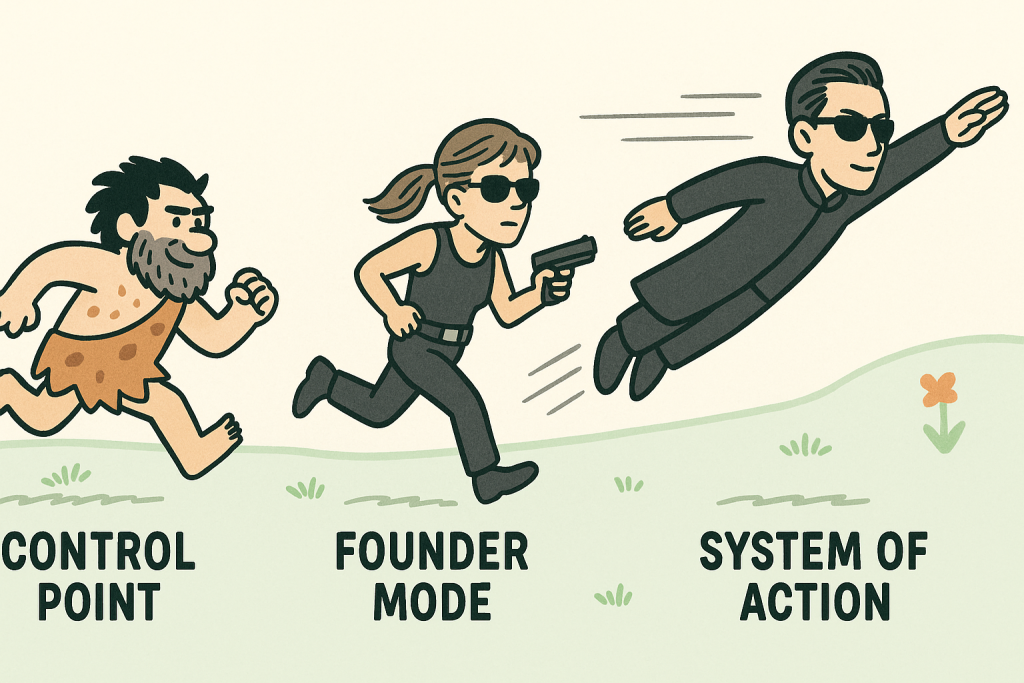
The control point is the last tool to be thrown out before an owner ceases operations, and more importantly, you have the unfair right to offer most products a merchant needs. The result will be that one or two Vertical SaaS players may dominate in any market.

Control points are the foundation of our thesis for Vertical SaaS. We’ve consistently observed that small businesses crave a single point of accountability, leading to the consolidation of technology stacks into one or two core systems. If you’re a control point, that’s a very good thing. The control point is the last tool to be thrown out before an owner ceases operations, and more importantly, you have the unfair right to offer most products a merchant needs. The result will be that one or two Vertical SaaS players may dominate in any market.
If you don’t occupy a control point, the goal of a Vertical SaaS Vendor (VSV) is to build a new one, acquire an existing one, or render the old competitor irrelevant. This effort is necessary because a competent competitor will eventually gobble you up if you don’t do it.
In traditional Vertical SaaS markets, there are typically one or two control points (sometimes you’ll hear these called “systems of record”). One of these is in the front office (i.e., a point-of-sale system). This control point drives sales and serves as the cash register. The front office control point’s counterpart is the back office—typically a general ledger to which everything is reconciled.
However, after spending the last five years studying control points, we’ve found that the modalities and patterns that define a control point have grown. These concepts have grown more powerful and far-reaching. As founders have embraced them, they’ve pushed the limits of what we thought was possible. We’ve learned from our Tidemark community that control points can be strategically dominant and dramatically increase TAM size. We think the future of Vertical SaaS all starts with owning the control point.
One of the first ways we discovered control points was by identifying something we call gravity.
Gravity
Control points are identifiable because they will use some combination of three types of gravity:
Workflow gravity is where the most users spend the most time. It’s the system other systems integrate into. Not all workflows deliver the same value. In my experience, the system of record workflow tends to deliver the most value.
How do you spot workflow gravity? There are three ways:
- The most valuable workflow: The process that generates the most important products or outcomes delivers the most dollars. The more explicitly the process delivers revenue, the better for the platform. (More on this in our “Follow the Money” section below.)
- Starting points: If you own the authoring tool, you have an unfair right to cross-sell downstream functionality. In productivity tools, this is paramount—companies like Canva and Adobe have done this with massive success. You can also look for the workflow where key decisions are made that kick off new workstreams. If your software is the place where that decision is made, you can easily own the implementation of that choice.
- User engagement: Finally, the most important workflow is often also where users spend the most time.
The canonical case study of workflow gravity is the ERP. Take medical supply companies, for example. They’ll often use SAP to manage their workflow. Get the temperature or sequence slightly off, and suddenly, your hair loss prevention drug is accelerating your customers’ journey to cueball status. Everything needs to integrate into SAP for those companies because that is where the mission-critical workflow is. This effect is so strong that some large companies are still trying to run 100% on SAP despite its sometimes outdated technology.
Data gravity is the system for the most critical information and is the hardest to migrate. Changing general ledger software has been compared to open heart surgery—a customer isn’t going to switch unless they have a heart attack because of their previous provider. That data can be critical to a client for understanding their customers (e.g., CRM) and managing risk (e.g., compliance). Data can also be critical in two-level situations: loan underwriting (e.g., a bank underwriting a merchant’s risk via POS data) or supplier information management (e.g., a client managing risk by validating supplier capabilities and quality). Data has gained increased gravity with the recent rise of language models.
Account gravity occurs when the system user is the highest-ranking individual in the customer organization. If your biggest advocate and user is the one signing the checks, you are sitting pretty. This relationship is a two-way street. When you are the most important vendor to a customer, you also have an unfair right to sell them another product. You’re trusted, you’ve been vetted by procurement, and you have the customer’s attention.
Another way account gravity appears is with integrations. Think of it like this: if you’re important enough, any additional product or system needs to play nice with you. For example, Tidemark’s CRM is Affinity, so we’re not going to choose an email vendor that doesn’t integrate into Affinity or a data scientist who isn’t familiar with their API.
Winning the control point is not easy. By its very nature, a system of record is hard to displace, implement, and onboard. A VSV will have to fight highly entrenched software companies unless the market is still using pen and paper. You may be able to do it organically with product innovation, but M&A can also be an option if the integration debt is manageable. If M&A is not possible, a slow winnowing down of your competitor may be the only approach available.
Control Points Patterns
In 2021, we started to notice multiple patterns that could be applied to capture control points. These patterns act as wedges to either capture control points unclaimed by competitors or, more likely, subsume existing control point competitors.
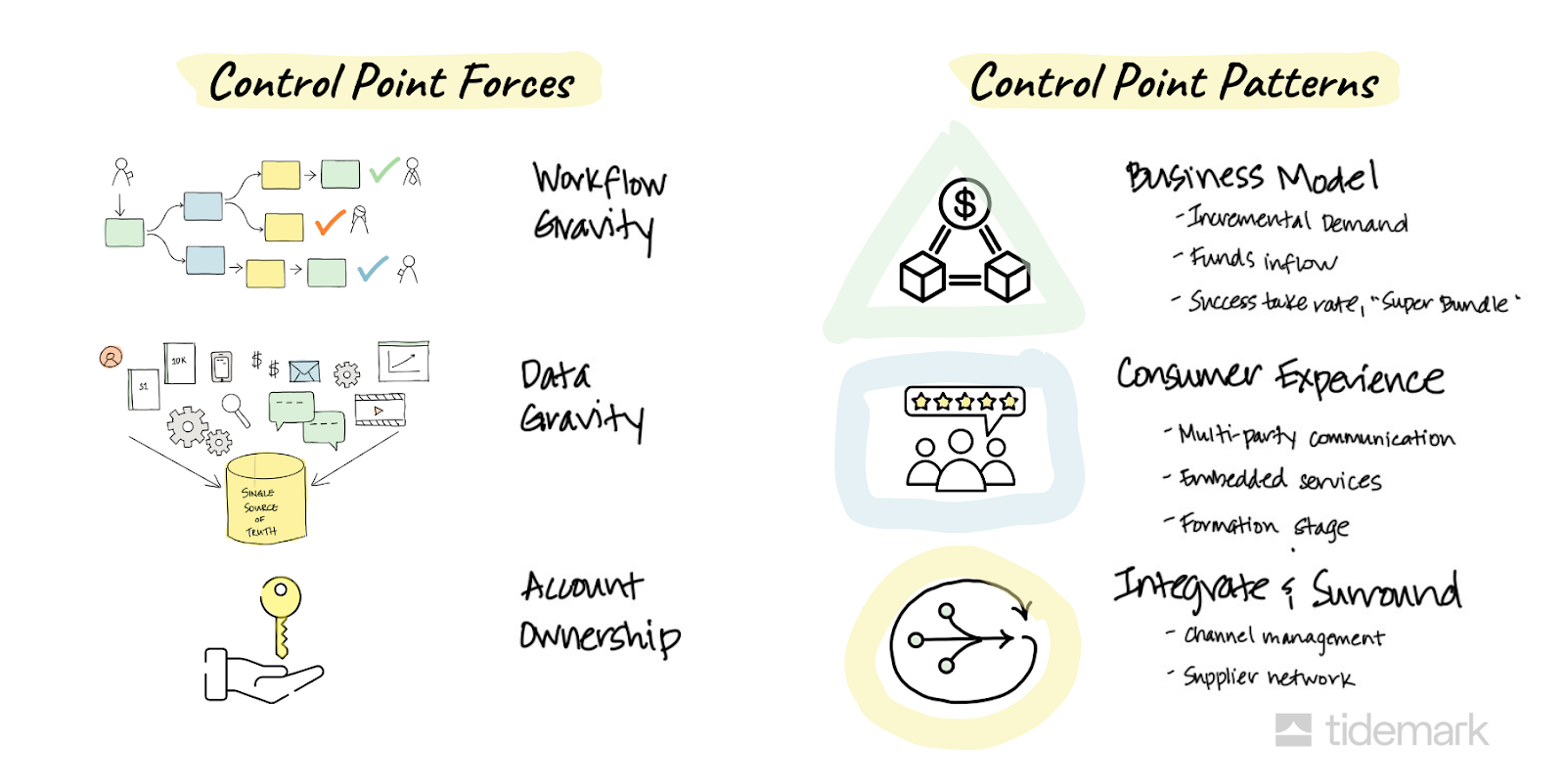
Business Model
Incremental Consumer Demand
In Vertical SaaS, bringing in customers beats most other value propositions. This business model pattern is doubly powerful because a VSV brings in demand and allows the merchant to fund the purchase of the VSV’s other software products. In the extreme example, if a VSV can generate demand, it can charge a take rate on demand, allowing it to offer disruptively low pricing on other products.
However, a VSV doesn’t need to provide demand directly. It can also generate incremental demand by increasing customer access through financing options (buy now, pay later), conversion through customer confidence (certification, fraud, etc.), integration into more demand sources (e.g., channel management), or improvement of the repeat rate through a CRM and loyalty programs.
Bring in Funds
When a VSV offers credit, insurance, or improved working capital management, it can help a merchant grow more quickly, similar to the impact on revenues. However, credit alone is rarely sufficient as a wedge, as it can be a commodity. To be effective, the provision of credit is usually accompanied by several conditions: scarcity of capital, difficulty in underwriting or servicing, being relationship-driven with potentially more than one constituent (both the merchant and the consumers), and a relationship that naturally trends towards exclusivity.
Success Take Rate and the Super Bundle
If a VSV correctly creates its product roadmap, it should co-benefit from its merchant’s success via a meaningful take rate of the merchant’s revenues. In doing so, any incremental product that the VSV provides to grow revenue increases stickiness and retention and may be monetized by multiple VSV offerings.
The super bundle of revenue-accretive products is a powerful concept. Dandy found that offering outsourced dental lab services could grow revenues as its dental office customers grew. As a result, the company benefits from any incremental offering that helps a dental office grow its customer base. Toast’s “Better Together” model describes how, in the restaurant ecosystem, products sold to each stakeholder—the owner, the employee, the guest, or the supplier—can benefit every stakeholder.
Changing the Consumer Experience
In many industries, a fragmented value chain separates the product provider from the customer through layers of wholesalers, distributors, and retailers. While this market structure is efficient for standardized products, uses, and purchases, a VSV can improve the end consumer experience as a specialized form of workflow gravity when these elements are not standardized. Examples include facilitating multi-party communication, providing product data (such as ingredients, performance attributes, authenticity, quality, reviews, and reputation), offering product training, and enabling procurement and auctions.
Here are a few more examples:
Embedded services can improve digital services with the interjection of human assistance, particularly if the task is highly complex, unfamiliar, or high-stakes. A live person often brings clarity, speed, and confidence. TurboTax Live, an embedded live accountant offering, was Intuit’s most successful product launch. GoDaddy sometimes offers free website design support during critical steps of a customer’s journey to increase the odds of success. Embedded services become a control point if the human consultants can provide strong account ownership and serve as trusted advisors.
The formation stage is a unique stage in the customer experience during which small businesses and consumers are often open to establishing long-term advisory and customer relationships. One example is LegalZoom’s add-on tax offering. They start with a legal formation product that engages a small business when it launches. By then helping small businesses with their accounting services, LegalZoom is building an ongoing advisory relationship with these businesses as they scale. In addition, small businesses that work with accountants tend to do better, as accountants also serve as business coaches. LegalZoom is creating a control point while helping its customers succeed.
Once you have determined how to transform the business or customer experience, you need to decide how to handle the competitors who own control points.
Integrate and Surround
When natural control point systems become old, fragmented, or entrenched, you can become the control point by building around them.
In some vertical markets, legacy practice management systems (PMS) dominate. They were built during the first wave of business software in the 1980s and 1990s as all-in-one packages, offering a lot of functionality. They were also usually sold as a license rather than a subscription, with little to no ongoing costs, so they are effectively free and hard to displace.
Because it’s too difficult to rip and replace a PMS, an alternative approach is a strategy we call “integrate and surround.” With the right value proposition (the best is a super bundle of incremental demand), there are new control points that VSVs can compel merchants to integrate into their PMS. The VSV can then extract key data and build on top of the existing PMS workflows. The VSVs can further open their PMS integrations to third-party apps, creating a network effect and platform economics. Over time, if done correctly, the VSV can relegate the PMS to the nameless system in the office closet, which is simply a data repository.
Integrate and surround is not an easy path. It requires a low-cost team to build and manage these PMS integrations and can also require the cooperation of the PMS themselves. Companies that appear to be pursuing this strategy include:
Channel Management
- SiteMinder’s hotel channel management system is on top of legacy property management systems.
- Olo’s site and channel management offering is on top of legacy restaurant enterprise point-of-sale systems.
- Zocdoc’s booking platform is on top of legacy healthcare electronic medical records and practice management systems.
Supplier Systems
- Dandy’s lab services are on top of legacy dental practice management systems.
- Vetcove’s supply networks offer direct integrations into legacy veterinary practice management systems for inventory and direct product-specific veterinarian communications.
As the Vertical SaaS opportunity expands, so does the concept of control points. Leading VSVs also need to be vigilant, as power dynamics can quickly shift, and new entrants have a strong opportunity to seize the high ground. This framework is characterized as a sequential strategy. In reality, most companies pursue multiple patterns concurrently, and the sequence reflects prioritization. However, these three patterns (business model, consumer experience, and integrate & surround) are not the only options.
New Control Points Patterns (2024)
Vertical SaaS is more dynamic than ever. We’re energized by how entrepreneurs are redefining the opportunity and creating new patterns of control points. These approaches capture the multi-product opportunity and can also dramatically increase TAM. We’ll cover each of these topics with its own essay, but some new patterns we’re seeing include:
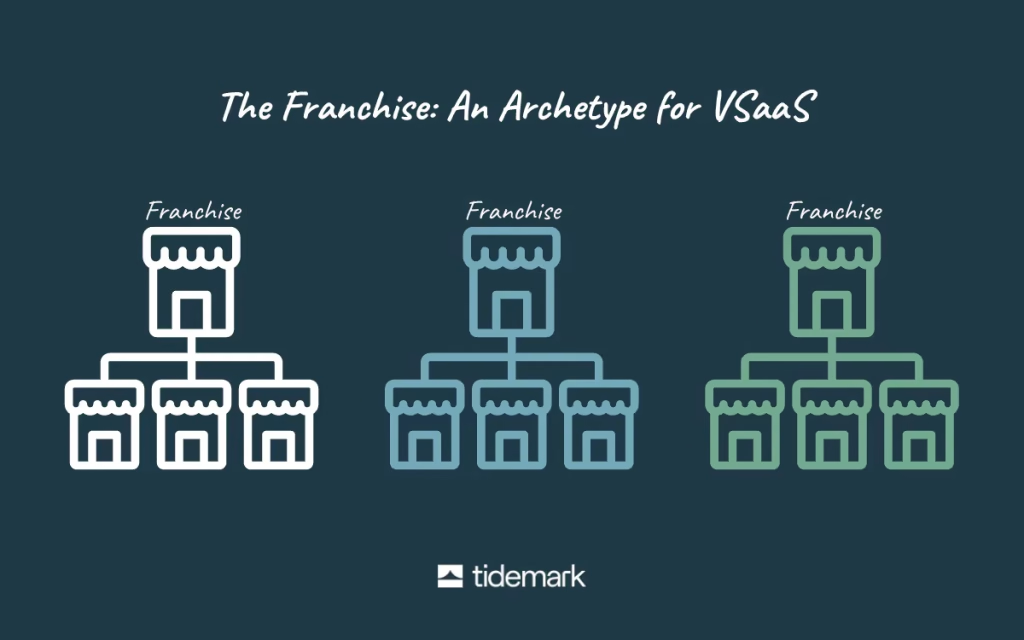
- The Franchise: We believe the traditional franchise model exemplifies the full potential of what a VSV can offer to merchants.
- Formation and Access: Helping merchants incorporate and be their software provider from the first minute they start gives you an unfair advantage in selling other offerings. If the VSV provides access to a critical resource, it can garner superlative take rates.
- Industry Ledger: This ledger tracks multiple stakeholders over time. It creates a single source of truth upon which you can build multi-party applications and solve industry-level problems. Since almost all legacy control points revolve around being the system of record for individual companies, a VSV can leap over these providers by integrating into each of them and being the source of truth for all related stakeholders in an industry.
- Run the Business vs. Do the Work: Traditionally, software has been better at handling standardized business operations than the specialized “craft” of a business. With the advent of generative AI and other automation, workflow control points may be able to run the business and do some of the merchant’s work.
- The Ecosystem: Ecosystem is a well-understood concept for some of the most dominant players—Windows, Salesforce, etc. However, in its vertical, a VSV can be equally dominant and compound its gravity by having all players integrate into it. This is also a variation of integrate and surround, where you surround existing control points with your own products and the industry’s third-party products.
If these ideas excite you, reach out to us at [email protected].










Keep up with Tidemark
Sign up to receive new content as soon as it's released