 Extend
Industry Transformation
This is the capstone, the pinnacle for the Vertical SaaS Knowledge Project. This essay describes the highest possible state of what a VSV can be. Admittedly, it’s aspirational, and more theory than facts and figures. But hey, you didn’t come to play the game; you came to win it all.


This is the capstone, the pinnacle for the Vertical SaaS Knowledge Project. This essay describes the highest possible state of what a VSV can be. Admittedly, it’s aspirational, and more theory than facts and figures. But hey, you didn’t come to play the game; you came to win it all.
Let’s suspend disbelief and take the plunge. If, at the end of this essay, you are a believer, come talk to us. We’d love to go on the journey with you to build the G.O.A.T. (Greatest of All Time) Vertical SaaS platform together.
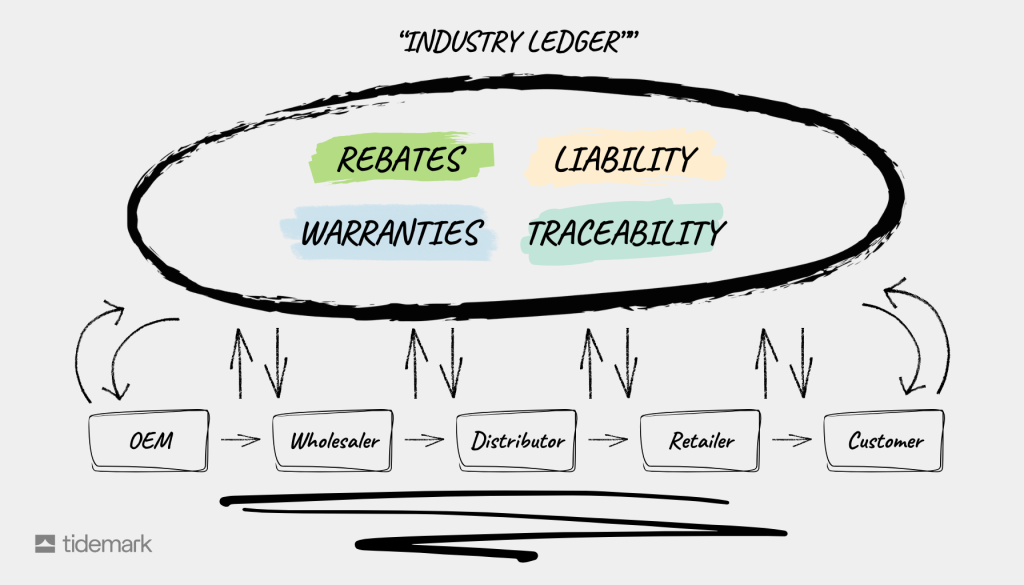
In previous essays, we’ve argued that a VSV’s progression should be Win the Control Point→Expand Offerings→Extend through Value Chain. The goal should be to win the control point of a single company by becoming the steward of the most important data or process of a business. Next, expand offerings such as payments, payroll, and insurance to increase LTV. From there, you extend through the value chain to other stakeholders: suppliers, employees, and consumers to increase TAM.
A multi-stakeholder workflow is valuable for all of the typical fiscal reasons (going multi-product, increasing TAM), but more important is the strategic value it offers. Engaging with multi-party stakeholders cements you as the crucial connector of an industry.
Built for founders, operators and executives. Register below to unlock the rest of this piece and access to our full library of research, frameworks and case studies, including our work on Control Points, the System of Action and how vertical software companies win and scale.




Keep up with Tidemark
Sign up to receive new content as soon as it's released