 Win
Does AI Remove the Incumbent Data Gravity Advantage?


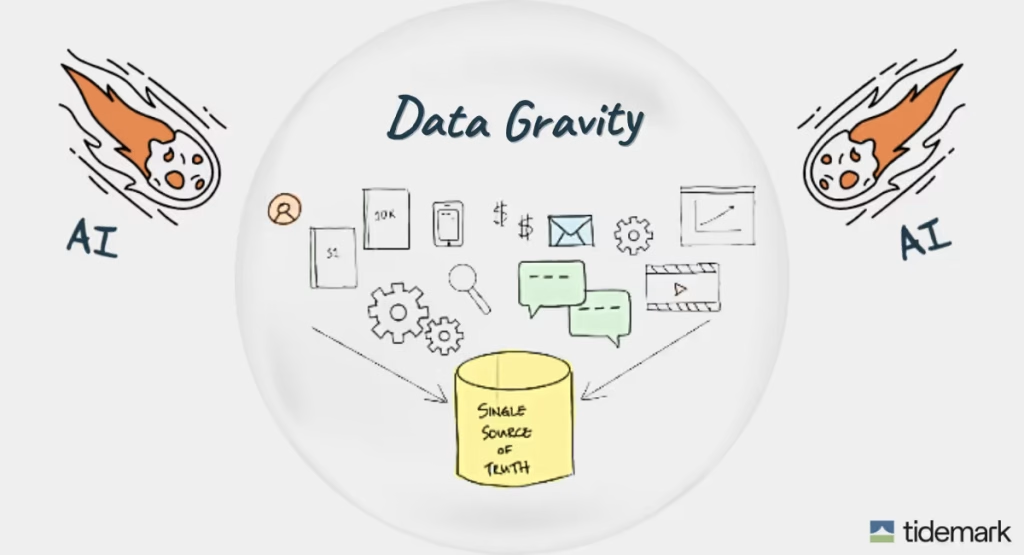
Investors and operators have long coveted systems of record. If you are one of those privileged software products, you benefit from data gravity—meaning you store the most valuable and largest datasets.
As a system of record, you own the control point. Customers are less likely to try to switch from you (giving you pricing power), and by owning the data taxonomy, you have an unfair advantage in offering additional applications that make use of your data. If you’re not the system of record and want to build on top of its data, you need to match the system of record’s data taxonomy—how the data is structured, labeled, and organized—forcing you to play by their rules. It’s a tough hand.
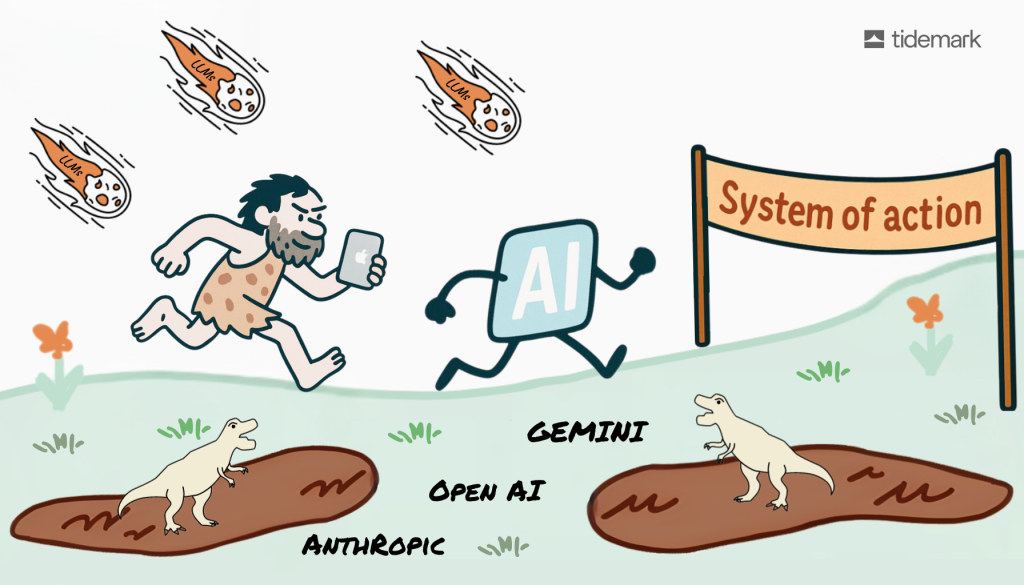
The power dynamics of data gravity are changing with generative AI. AI has the potential to lower that incumbent advantage and what it means for a business to benefit from data gravity. In fact, being a system of record may no longer pose as staunch of a moat as it did just 12 months ago.
AI serves as a bundling layer to structure data spread across different software applications. It can be applied in two distinct stages: integration, where it consolidates data from various sources with a focus on the interoperability of that data, and orchestration, where it streamlines and automates workflows across these integrated systems (we’ll tackle orchestration and workflow gravity in a subsequent piece).
Built for founders, operators and executives. Register below to unlock the rest of this piece and access to our full library of research, frameworks and case studies, including our work on Control Points, the System of Action and how vertical software companies win and scale.








Keep up with Tidemark
Sign up to receive new content as soon as it's released