Design to Build


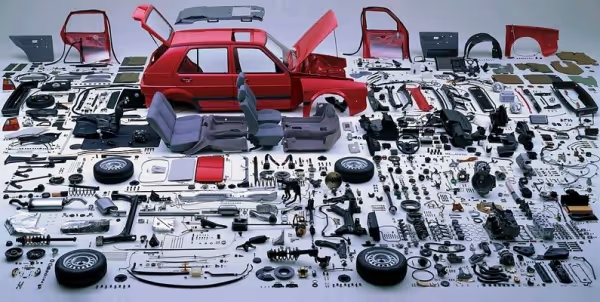
Building digital is relatively easy—low code lets even measly economics majors like us build an app. If you hack around in Notion long enough you can build a wiki, a task management tool, or almost anything else you can dream of, all within a couple of hours. In contrast, building in the real world is tough. Just ask Zuck! He’s halfway through building the Metaverse, but can’t get past the permit phase of building his Palo Alto compound.
Bytes are easy; atoms are hard. This wasn’t always the case with bytes, and it will not always be the case with atoms.
We believe that building in the physical world will follow a similar evolution as was seen in software development. Software initially optimized internal workflows. The physical world will be the inverse, requiring external workflows with a higher level of contracting, verification, and automation. The software vendors that build for these problems will create platforms that look more like networks than mere applications. Though the challenge is greater than building just another SaaS app, it will allow for a larger, more defensible business that can greatly improve large portions of the physical world.
By examining the history of software development, we can forecast the future of physical automation.
Built for founders, operators and executives. Register below to unlock the rest of this piece and access to our full library of research, frameworks and case studies, including our work on Control Points, the System of Action and how vertical software companies win and scale.

















Keep up with Tidemark
Sign up to receive new content as soon as it's released