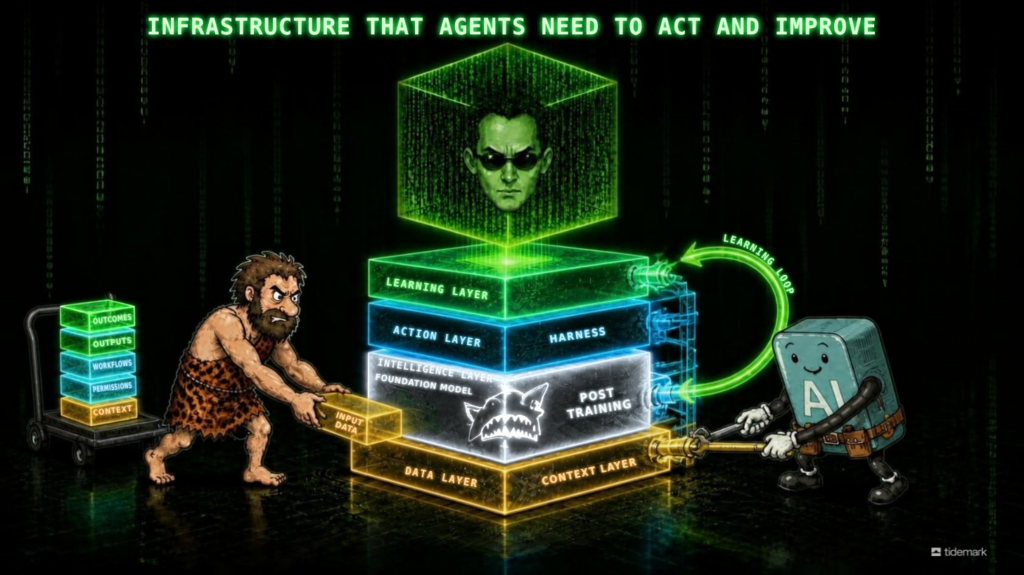
What Customers Want: Workflow Gravity
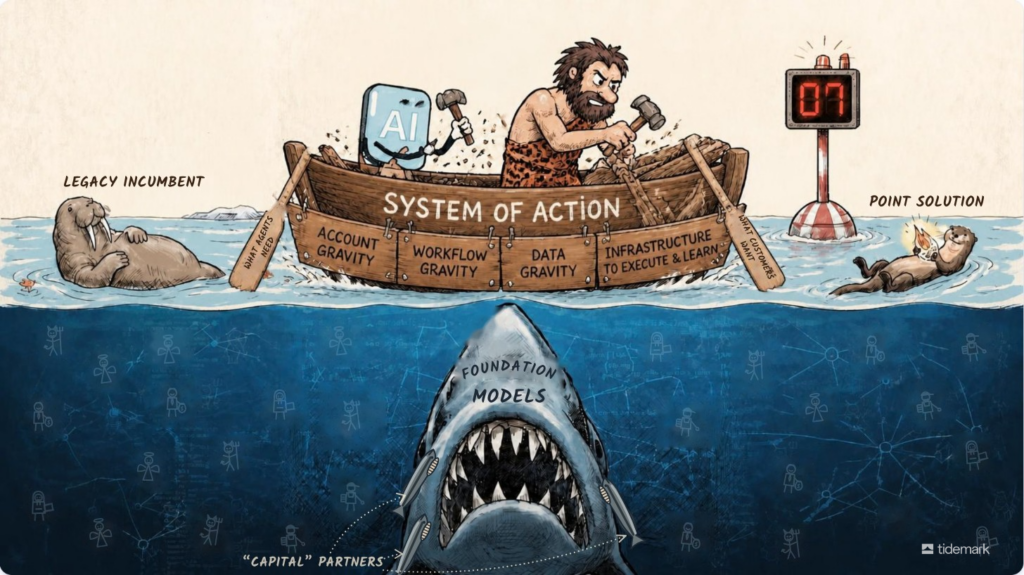
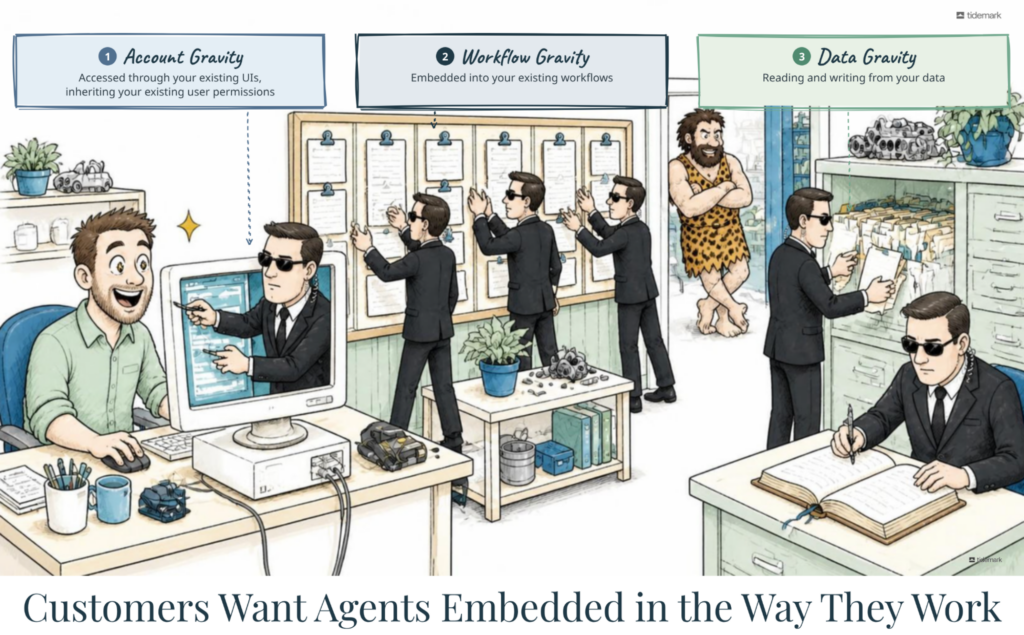
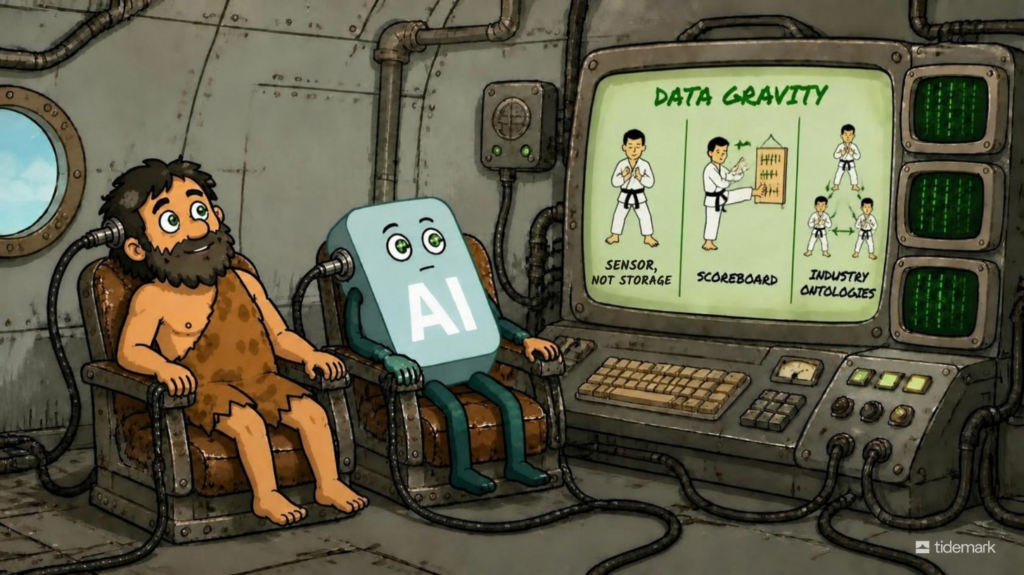
Account, workflow, and data gravities have become more specific & inter-compounding; these gravities set the foundation for the System of Action.

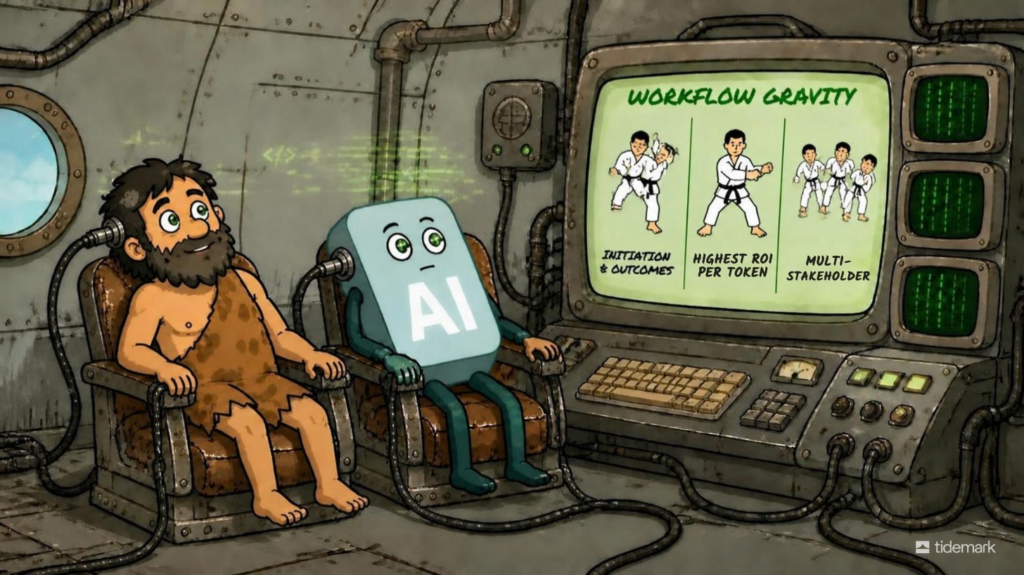
So far, we’ve been covering the different gravities that allow you to build a moat around your System of Action. We previously covered account gravity; now we’ll walk through workflow gravity.
In other words: when you build into the ways your users already work, you have an unfair advantage. Below, we’ll walk you through the best places to embed within your users’ workflow, and the tactics for doing it well.
Initiation
Initiation means owning the moment work begins: the trigger that sets a workflow in motion. Owning this gives you the unfair right to invoke and own the downstream actions. It also ensures your access to key input data and context (see Input Data and Context in Data Gravity).
Initiation can be the first step in a process, but it comes in other flavors too.
“(If you’re default on), your diffusion speed becomes a function of how willing you are to stand behind quality and turn things on by default.”
– Nate Baker, CEO of Qualia
In many industries, the most compelling Initiation workflow is bringing in customers. In small businesses (and almost every business), it’s the number one priority. Sales engagement is also often the most natural point to capture critical context on the customer (see Context in Data Gravity below). Fortunately, it’s also a great use case for agents. Very few businesses can afford to engage with customers 24×7. And quoting and estimating are often subjective, requiring a wide range of considerations that front-desk staff may not be trained or motivated to weigh.
Initiation can also mean providing the tool for the Hero User (the scarce expert who picks their own tools) who initiates the work, or the Hero Stakeholder who holds the power.
In an agentic world, Initiation can also mean making the key, high-stakes decision that unleashes a workflow: the loan approval, the claim adjudication, the treatment plan.
Whatever the flavor, the agentic version of Initiation is “default on”: the customer doesn’t have to decide when to use AI; stuff just happens automatically.
Outcomes
Outcomes are what goes on the Scoreboard (the measure by which a business understands the success of a job and your contribution). Did your claim get approved and paid by the payor? Did your marketing campaign acquire a customer? What was it worth?
Many founders mistake outputs for outcomes. An output is what your system produced: the decision it made, the action it took. The outcome is what then happened in the real world. Outputs are only worth something once you can attribute them to outcomes, and the outcome usually gets recorded in a System of Record (see Outcome Data below). When it lands outside your system, find a way to track it anyway.
Owning the offerings where outputs are produced and outcomes are recorded is critical because it allows you to train your agents to get better and own the Scoreboard.
Earn The Right to Orchestrate
Sometimes it’s tough to own the job end to end. So you have to earn the right to orchestrate.
Occasionally the product category is literally the orchestrator, e.g., a practice management system whose reason for being is to sequence the work and coordinate the employees. But the rest of us have to earn it.
You earn it by being the highest ROI per token. Your customers want intelligence; your job is to make sure the highest-ROI place to consume that intelligence is your platform.
“Customers will be consuming tokens. I want them to consume on our platform. To ensure that, we need the highest output per token. Every product surface must be the best micro harness for that job, and our platform as a macro harness is only as good as the collection of micro harnesses.”
– Sean Doherty, CEO of GovDash
Being the highest ROI per token is a wide-ranging mission, but we’ve seen workflows get there in seven ways.
Address the highest-ROI work.
The sticky jobs that cause ulcers and sleepless nights. The work of the Hero User or the Hero Stakeholder. And the Cousin Richie work: important work currently done poorly, done by expensive outsiders, or not done at all.
Action a broad surface area.
Intelligence that can trigger lots of valuable downstream workflows earns more per token than intelligence trapped in a point solution.
Go deep.
Breadth provides agents leverage, but ask any CEO what keeps them up at night, and it’s rarely the horizontal competitor covering the same ground they do. It’s the specialist: the narrow one that covers less ground but goes much deeper, handles the complexity of a specific use case, and can finish the job, all the way to the outcome.
Capture undocumented, non-digital workflows.
Often, an industry’s rule sets don’t live in software. They live on clipboards and in the minds of a select few humans. These humans are often transient and can rarely handle multiple overlapping configurations. For example, in healthcare there are typically four levels of rule sets: universal, specialty, practice, and customer. AI is great at encoding these rule sets and executing them with agents.
“The hardest part of healthcare AI isn’t the AI. It’s getting all the rules sitting in binders into software.”
– Jeff Liu, CEO of Assort Health
Execute efficiently.
We’ve moved out of the exploration phase of agents. Inference is not free. Model routing and post-training are now table stakes.
Run deterministically wherever you can. Deterministic is low-cost and high-control, and plenty of valuable work doesn’t need a reasoning model; it needs to run the same way every time.
“The human logic is really what we’re enhancing or replacing with the LLMs, but there are a lot of things in the enterprise that just have to happen a certain way. (Deterministic) software is better for that.”
– Pablo Palafox, CEO of HappyRobot
Double down on collaboration.
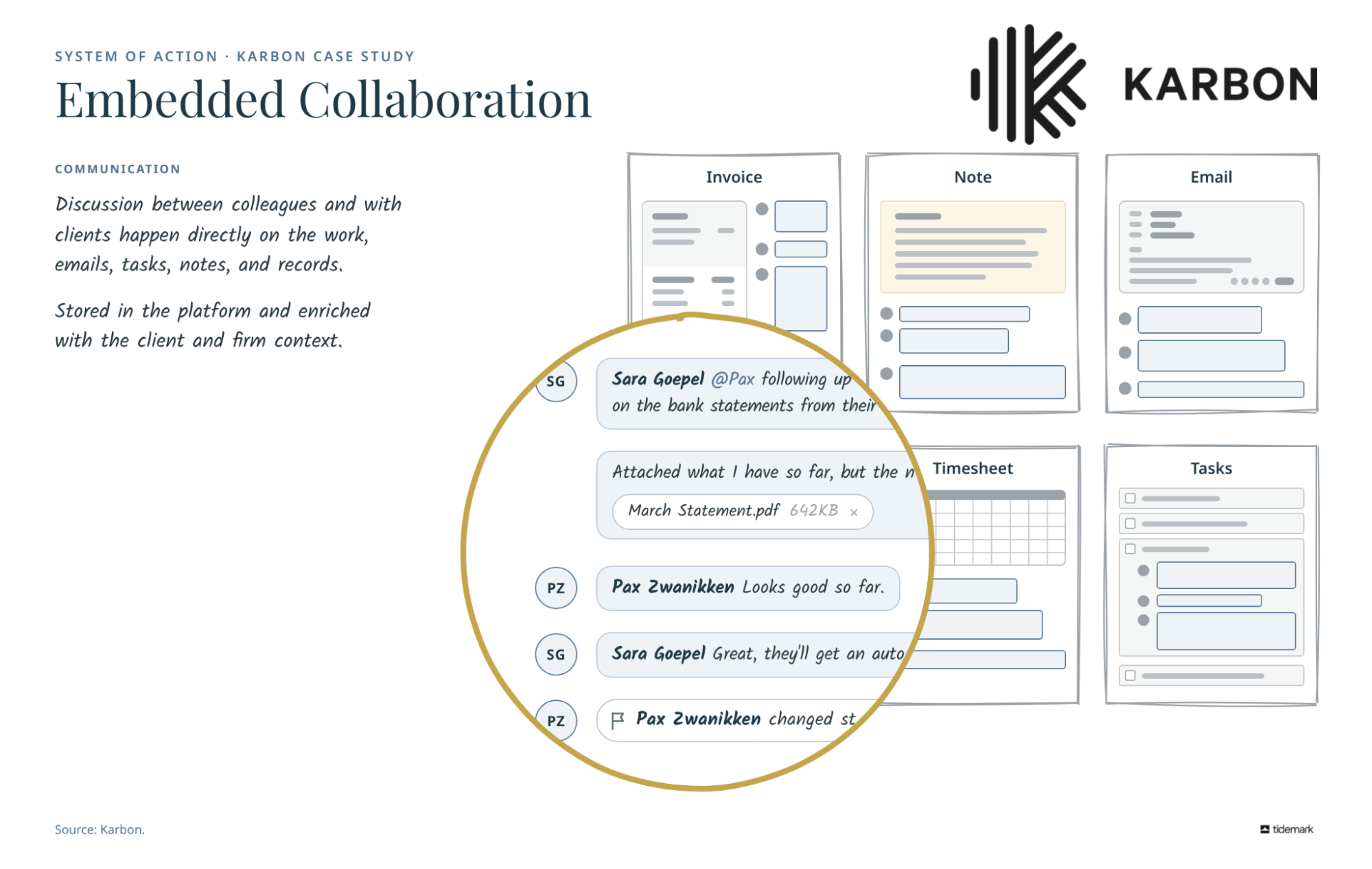
Foundation models are still surprisingly bad at collaboration, whereas your product may have been built with that in mind. Double down by embedding collaboration and communication deeply into everything you build.
Climb the hierarchy.
The manager, the VP, and the C-suite each own bigger goals than the person doing the work below them: more budget, more P&L exposure, and more authority to say yes to the next line item.
Karbon Case Study: Embedded Collaboration and Automation in Every Step
Our portfolio company, Karbon, is an example of a Control Point category leader well-positioned to bring agents to its industry. Karbon is the leading practice management system that runs an accounting firm’s client lifecycle from proposal to parceling out the work to invoicing.
Everyone in the firm is on the system all day, every day, with roughly 75% DAU/MAU –better than Facebook at its peak. Employees, customers, and partners communicate in real time, embedded across every email, note, task, and record.
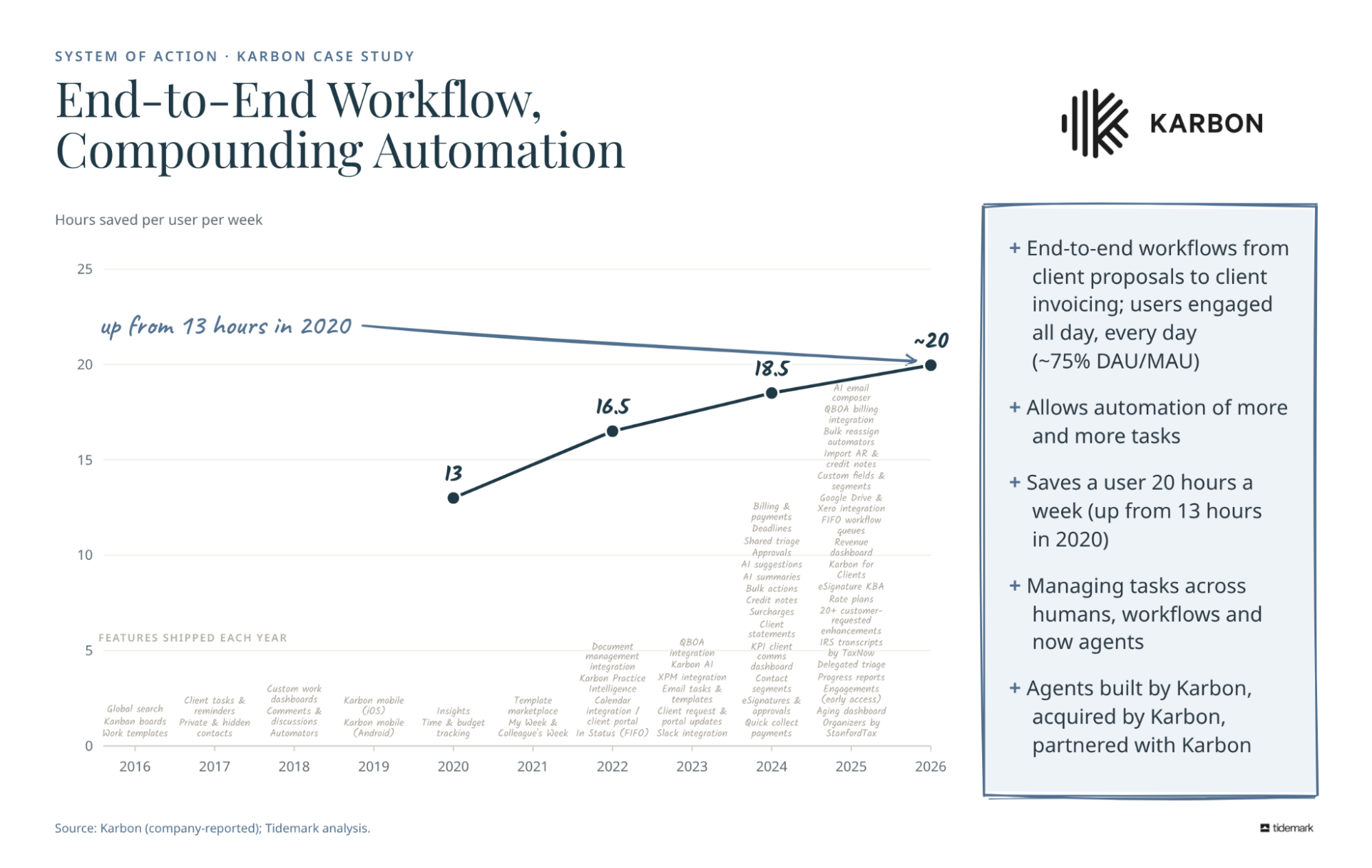
On top of that practice management backbone, Karbon has added automation at every step and now saves the average user about 20 hours per week, up from 13 hours in 2020. This same backbone orchestrates agents (some from Karbon, some from its partners) as well as critical human-in-the-loop reviews.
If an accounting firm wanted to use agents to automate a task, why wouldn’t they want it orchestrated within Karbon’s workflow?
Multi-Stakeholder Moats
Earning the right to orchestrate across external stakeholders is especially hard. Before generative AI, it required getting two or more parties, who may not entirely trust each other, to agree on a single system that spans their firewalls.
Start simple. Collect payments from customers. Pay employees and vendors. Money workflows carry natural switching costs and high stakes.
Next, take advantage of AI’s superpowers. AI’s non-determinism is surprisingly good at the unstructured, semi-digitized workflows that run over manual channels (phone lines, email threads, texts, and long attachments) that typically connect your customers to their external stakeholders. That makes it a perfect problem-technology fit for agents.
Automate the communications that bring in revenue: the phone, text, and fax. Turn those interactions into workflows, and you now have two stakeholders standardizing on you.
That is the beginning of network effects.
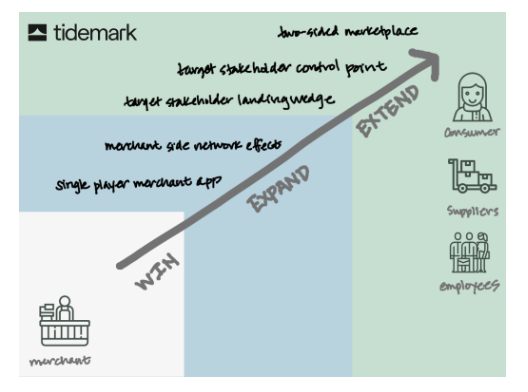
To go deeper, we wrote extensively on multi-stakeholder workflows (we called it “Extend Through the Value Chain” in our Control Points series) and how to build for your customer’s suppliers, employees, and customers. These were written pre-agents, but the concepts and value propositions remain the same. For the agentic version of building for your customer’s customers, see Sell-side agents in Account Gravity.
Case study: Onfly
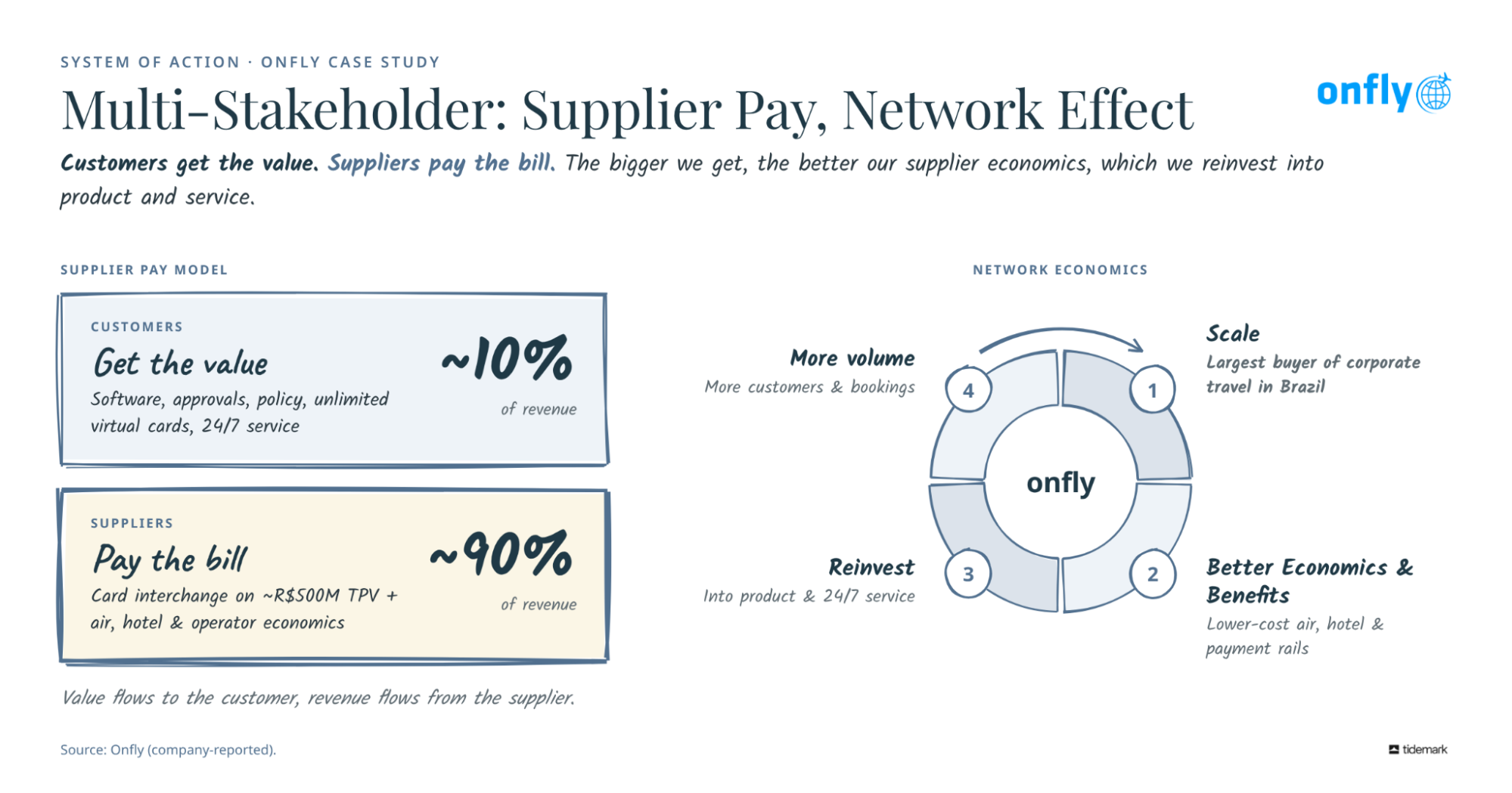
Our portfolio company Onfly is a great example of a multi-stakeholder moat. It’s a corporate travel and expense platform used by more than 4,000 companies in Brazil. Finance teams get real-time visibility and policy compliance, travelers book flights, hotels, and cars in one place, and airlines and hotels get high-value business customers. Suppliers fund roughly 90% of the revenue.
Why would customers switch if Onfly is saving them money and they’re barely paying for it? A competitor would have to match the value for all three groups and rebuild the supplier relationships that fund it.
This moat gets stronger over time in two ways. As Onfly becomes Brazil’s largest corporate travel buyer, it can command better prices from suppliers, letting it pass those savings to customers. And the more corporations and suppliers standardize on the Onfly platform, the better Onfly can personalize the traveler experience.