What Customers Want: Account Gravity
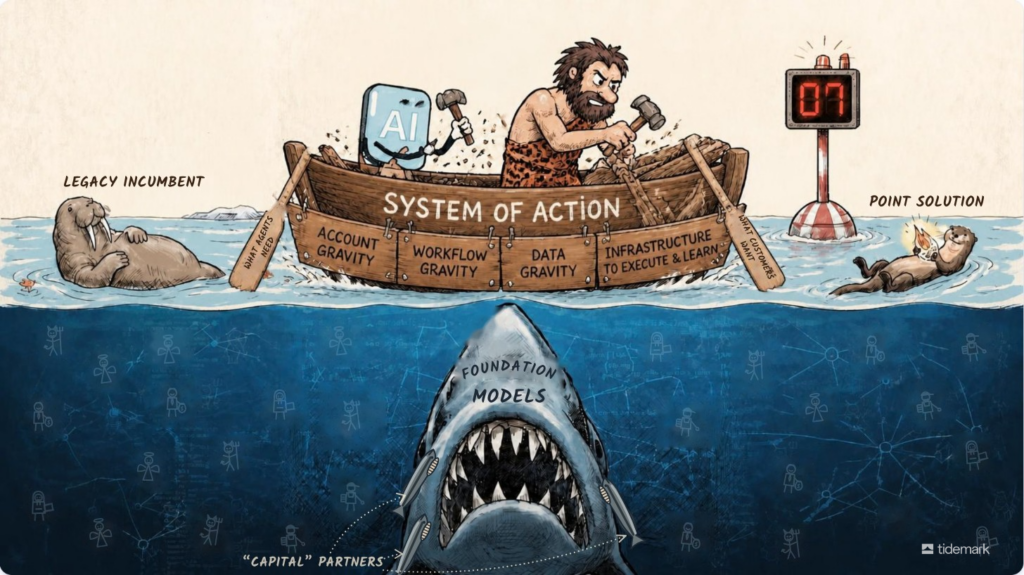
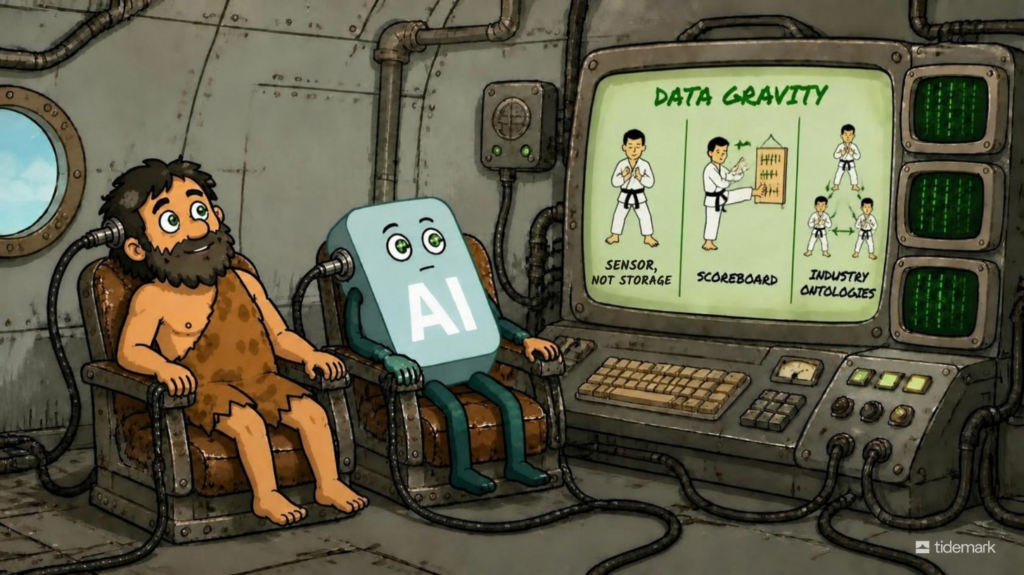
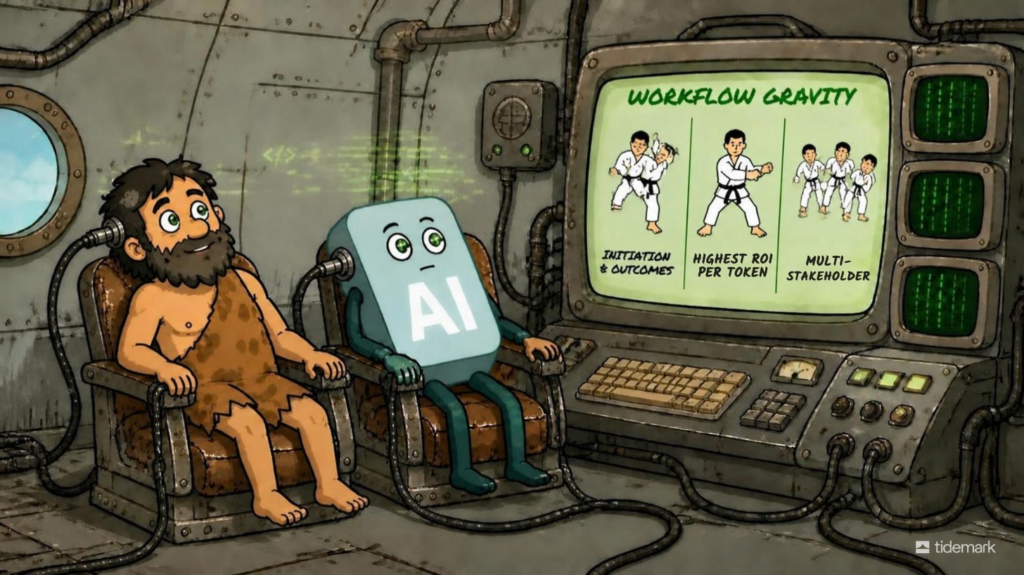
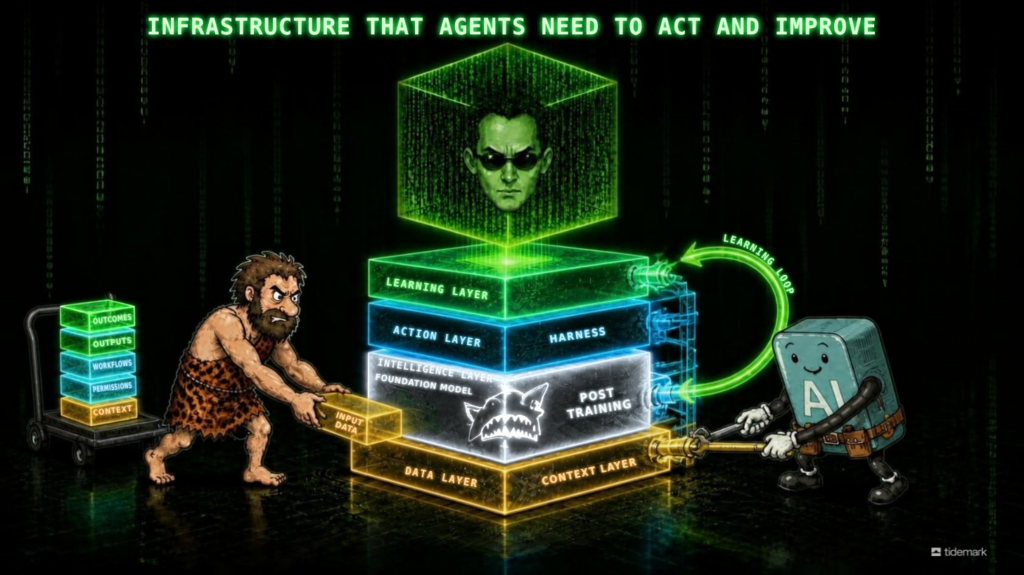
Account, workflow, and data gravities have become more specific & inter-compounding; these gravities set the foundation for the System of Action.

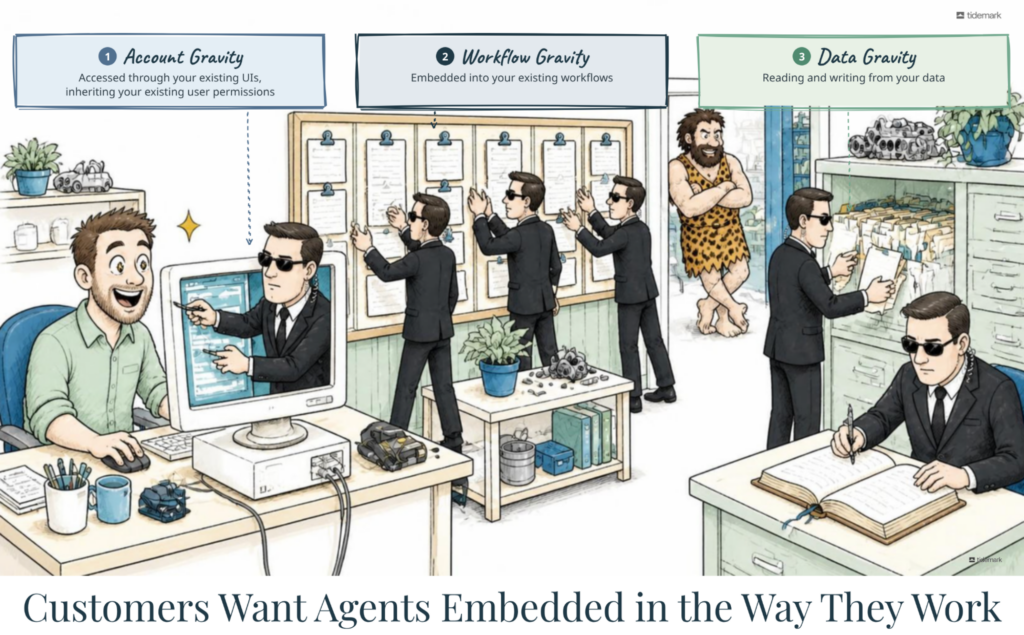
Lazy conventional wisdom suggests that AI demolishes moats. This is sloppy thinking. The nature of moats has changed, but real, predictable sources of defensibility remain, and we describe them below.
Customers want AI where they already work, which means the System of Action runs on the same Control Point gravities we’ve written about for years: account, workflow, and data.
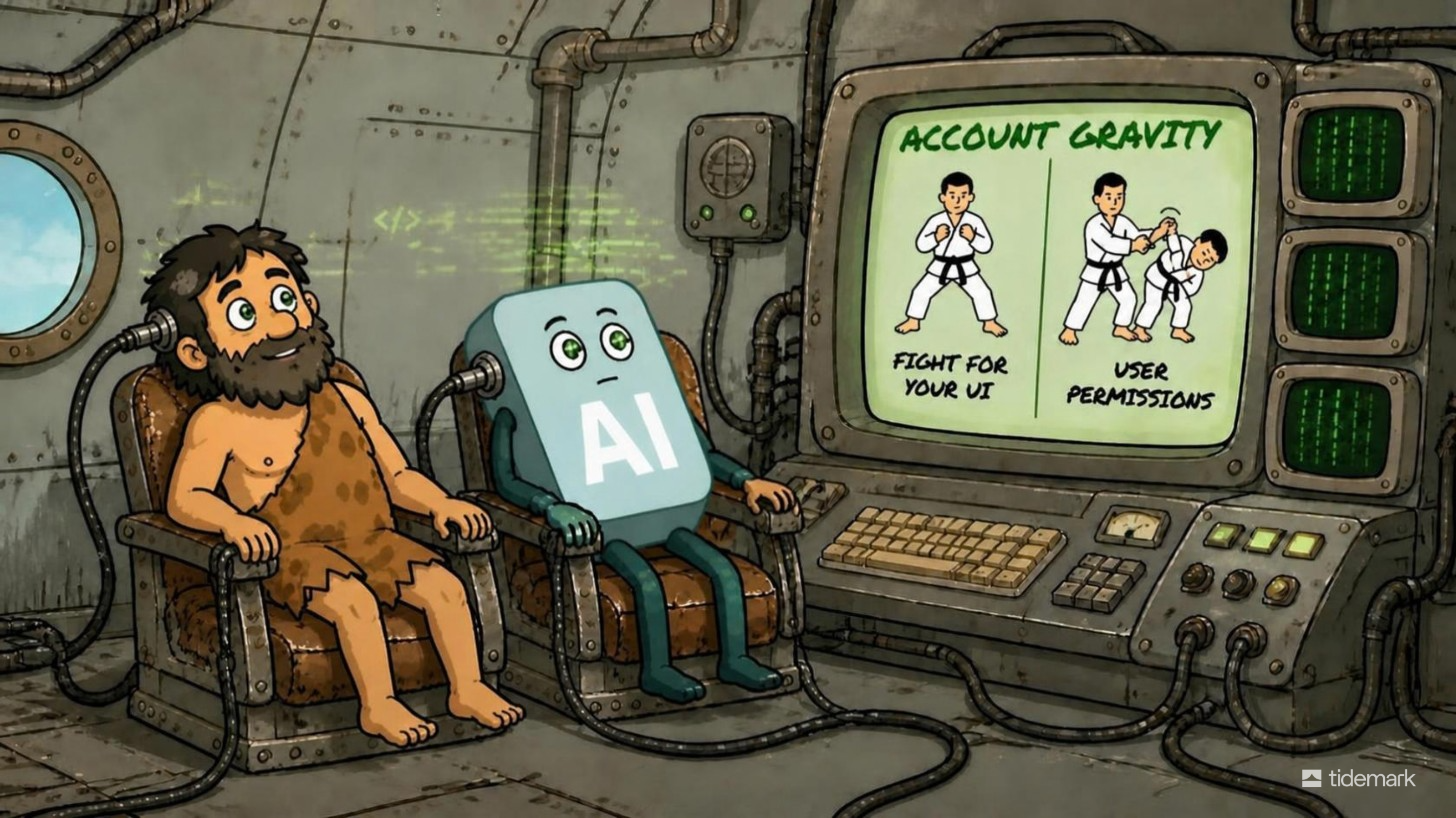
In the vertical SaaS era, the gravities were additive and non-dependent. You didn’t need them to work together to create a moat; each one worked well enough on its own. In the agentic era, gravities are compounding: Account gravity earns the permission. The permission unlocks the workflow and the data. The workflow generates the outcomes. The outcomes train the intelligence.
These gravities not only deliver what customers want but also anchor a System of Action’s moats.
Let’s get into some examples, starting with account gravity.
Account Gravity
Account gravity is the pull of owning the customer relationship: the interface your users live in and the habits they’ve already built, the owner’s trust in your brand, the permissions your users have already granted, and the procurement gauntlet you’ve already survived. (See Control Point Patterns.)
Start with three to build your moat: behavior incumbency, user permissions, and UI.
First, if you hold the control point, don’t underestimate behavior incumbency.
Many of your customers have standardized on you. You are how they work. Choosing you again requires no behavior change: no new way of working, no new UI to learn, no new vendor to onboard.
With that foundation, you can build on top of user permissions.
If agents are doing sensitive work on sensitive data (and the valuable ones are), permissions matter enormously. Why force a customer to map roles and permissions all over again for a new vendor when they can inherit yours?
This is a more powerful value proposition than you might expect. Venture gossip: Databricks is becoming one of Anthropic’s largest resellers on the back of its incumbent user permissions. Customers would rather consume tokens through Databricks’ established user permissions, which they already trust, than remap them from scratch.
Fight for your UI.
This is where the frontier labs are coming at you hardest. Cowork-style surfaces want to become the new UI for work, and a fashionable line of advice says to let them: go headless, become a tool in somebody else’s marketplace, be where your users are.
Sometimes you have to take this approach, and if you must, find a way to show up that doesn’t give away the business (more below on MCPs). But if you can help it, don’t let go of your UI easily. You’ve built it for your customer’s industry, their personas, and the jobs they actually do. It’s where you engage with your customers daily. Don’t give that away.
And if you’re inclined to trust the labs to be good partners while you decide, consider Figma’s experience:
“They (Anthropic) were not consistently candid in their communications.”
– Dylan Field, Co-founder and CEO of Figma
How to Fight For Your UI
How do you compete for the UI when the world is enamored with Cowork and ChatGPT?
You build the best tool for the job.
Build bespoke UIs for your customer’s industry, personas, jobs to be done, and the environments they operate in.
“I think we’ve been in the sort of a command line era for AI thus far, where it’s all about kind of the user learning this arcane language of prompts and contorting what they want to make happen… That doesn’t bring me joy as a user. I think it doesn’t have to be that way.”
– David Webster, Head of UX at Google Labs
A blank prompt asks the user to supply the expertise. Your UI should provide it for them: exceptional UI is basically a strong opinion about who is doing this work and how it gets done. It has familiarity, so nobody has to learn a new way of working. It builds in trust, sources shown, confidence stated, process visible. It creates speed, because inference latency is the new dial-up. And it gives your users agency. Don’t underestimate that. Users want tools and agents to empower authorship.
The best applications come from dogged craftsmanship in understanding the specific context of a given job and the users’ needs. Customers want buttons for deterministic actions: checking off tasks, launching workflows, launching agents. Voice for activities in the field; call center for inbound; embedded DocuSign to sign off; embedded chat to talk to colleagues and customers. Provide a UI that gives your users whatever they need to get sh*t done.
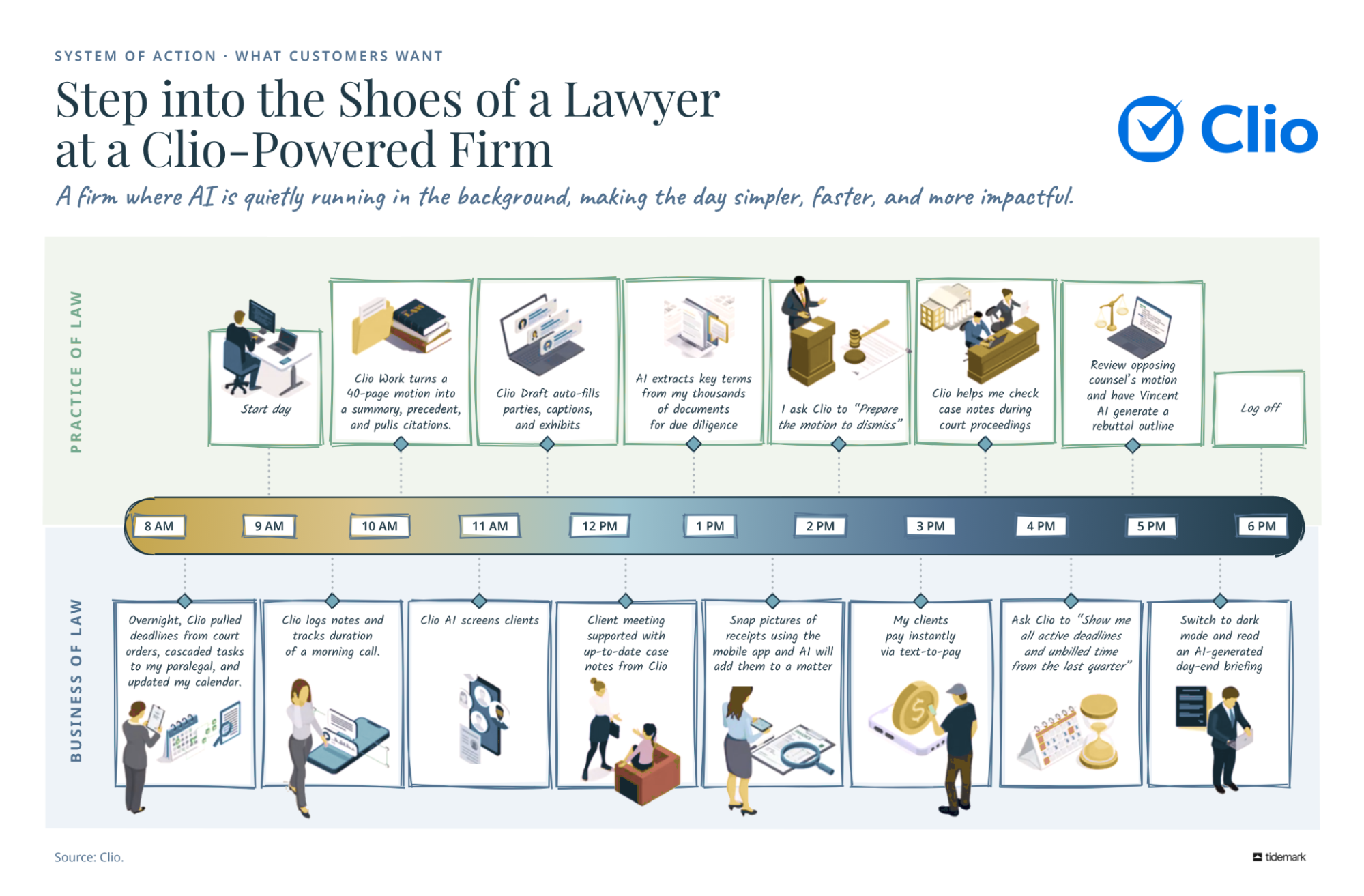
On the consumer side, we’re just starting to see UIs built on and for this new technology. Two very different opinions (Muse with avatars, Instinct embedded in iMessage) are both demonstrating explosive traction. Meta launched Muse on September 8, and ten days later it was the top free app in the US App Store, ahead of ChatGPT. As of late September, Muse amassed 3.4 million downloads, as reported by Sensor Tower. Instinct, which has taken an invite-only strategy, has also taken off. We weren’t able to substantiate it externally, but we’ve heard it reached 2 million downloads after 30 days and is still growing 10-12% daily.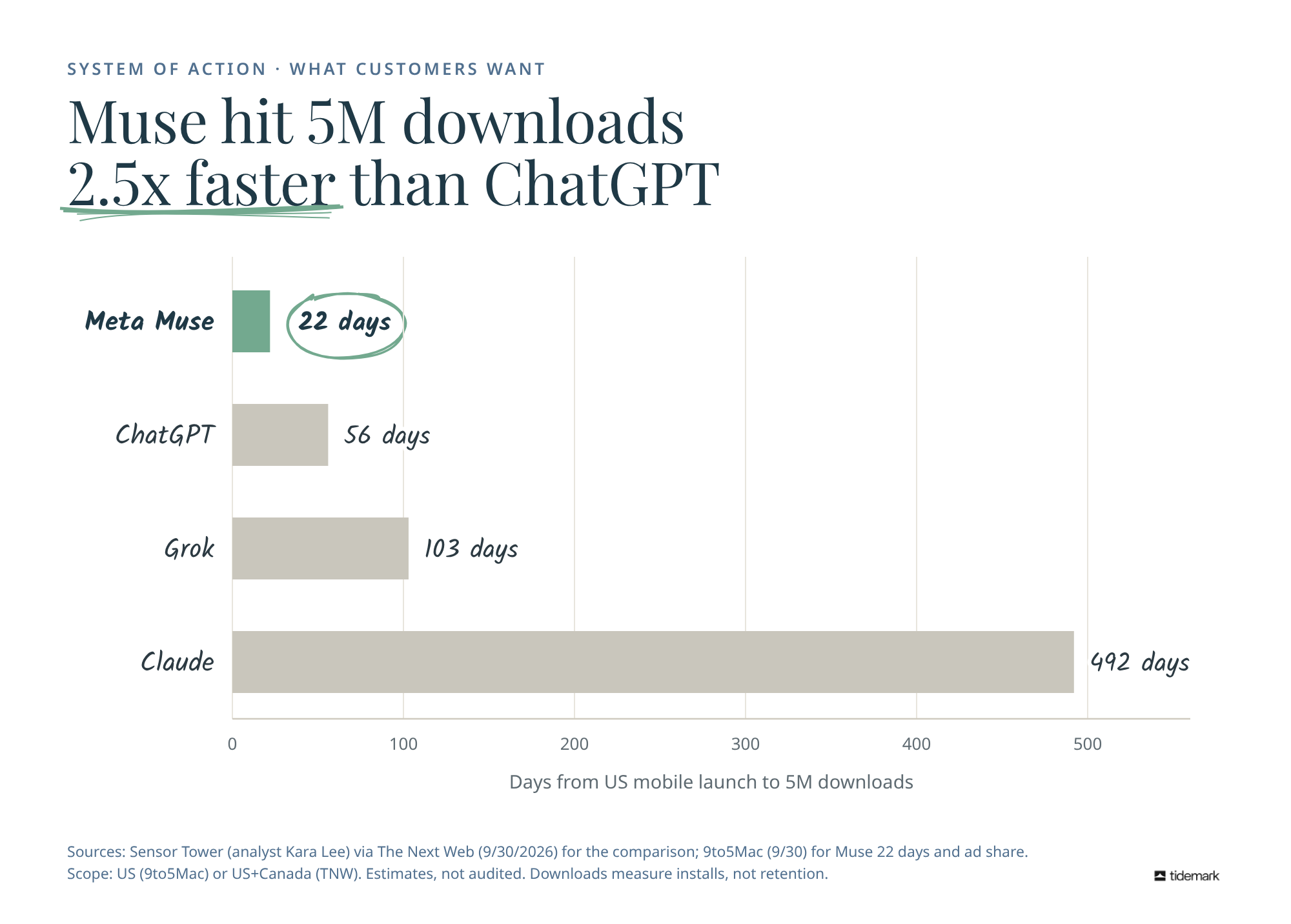 I think the opportunity to build bespoke UIs for businesses is even deeper. I love this example from our portfolio company Clio. Clio provides user experiences for each persona in the law firm and all the varied work they do. All on top of a unified workflow and data model in the background.
Build UIs for Builders
Treat CIOs and private equity owners as a special persona. These buyers want “to AI” too. Make them look good to their bosses or the board, and they will love you forever. Give them a sandbox or an IDE to build on your platform, with all of its permissions, data semantics, and validation.
The IP they build on top of your product is stickiness you didn’t have to create yourself.
Take Harvey: it offers roughly 500 prebuilt agents, but customers have built more than 25,000 agentic workflows on top of them. Fifty to one, and Harvey didn’t write a line of that IP.
Build a UI for Agents
MCPs: If you’re going to offer MCPs, offer an MCP that developers love. This can be powerful, because developer love is now distribution. Notion’s MCP pulls us deeper into Notion every week; our CRM’s MCP (I won’t publicly shame them) quietly pushes us away.
But, be intentional about how you offer MCPs.
Don’t expose raw data or individual workflow steps; expose outcomes your own agents deliver.
APIs have always leaked data. Careless MCP servers leak something worse: process intelligence, the step-by-step reasoning of how work gets done in your industry.
Let outside agents hand you the job, and keep the how for yourself. Be the orchestrator, not the orchestrated
Sell-side agents: We don’t know if Muse or Instinct has the right paradigm, but consumer agents are coming. And these consumer agents can buy! Noah Shinn, Instinct’s founder, shared: “Three weeks in, there’s a 40% chance that the user has shared a personal credit card with Instinct.” We’ve heard similar things from our friends at Stripe.
We believe this is an enormous opportunity for merchants and the vertical platforms that serve them. Fielding all these agents (and blocking the scraping bots) is an immediate need.
But the bigger opportunity is expanding the scope of e-commerce. Traditional e-commerce works great for commoditized, easily comparable goods. But buying high-consideration, complex, high-value goods entails multiple store visits, phone calls, and interactions. Consumer agents can automate that friction.
A sell-side agent can automate what a good salesperson does, around the clock, for every inbound agent. It spots the scraping bot and the tire kicker. It has every product answer in seconds. It asks the right questions to understand the need and price sensitivity. It negotiates on your behalf, with full context on your inventory and the customer’s current and potential value. It merchandises the most profitable add-on at exactly the right time. It explains the contract terms, chases the contract, schedules the appointment, and onboards the customer.
This is the agentic version of what we called the consumer extension in 2022: the hero’s path for a vertical platform, out from the merchant’s front office to the end customer. What’s new is that the new consumer is an agent, and the merchant’s best salesperson will be one too.
Build UIs for Humans Managing Agents
Finally, agents create many escalations and exceptions. Build the UI for the humans who have to work through them at scale. Help those humans see what the agent is doing and unblock it when it’s stuck.