What Agents Want: Infrastructure
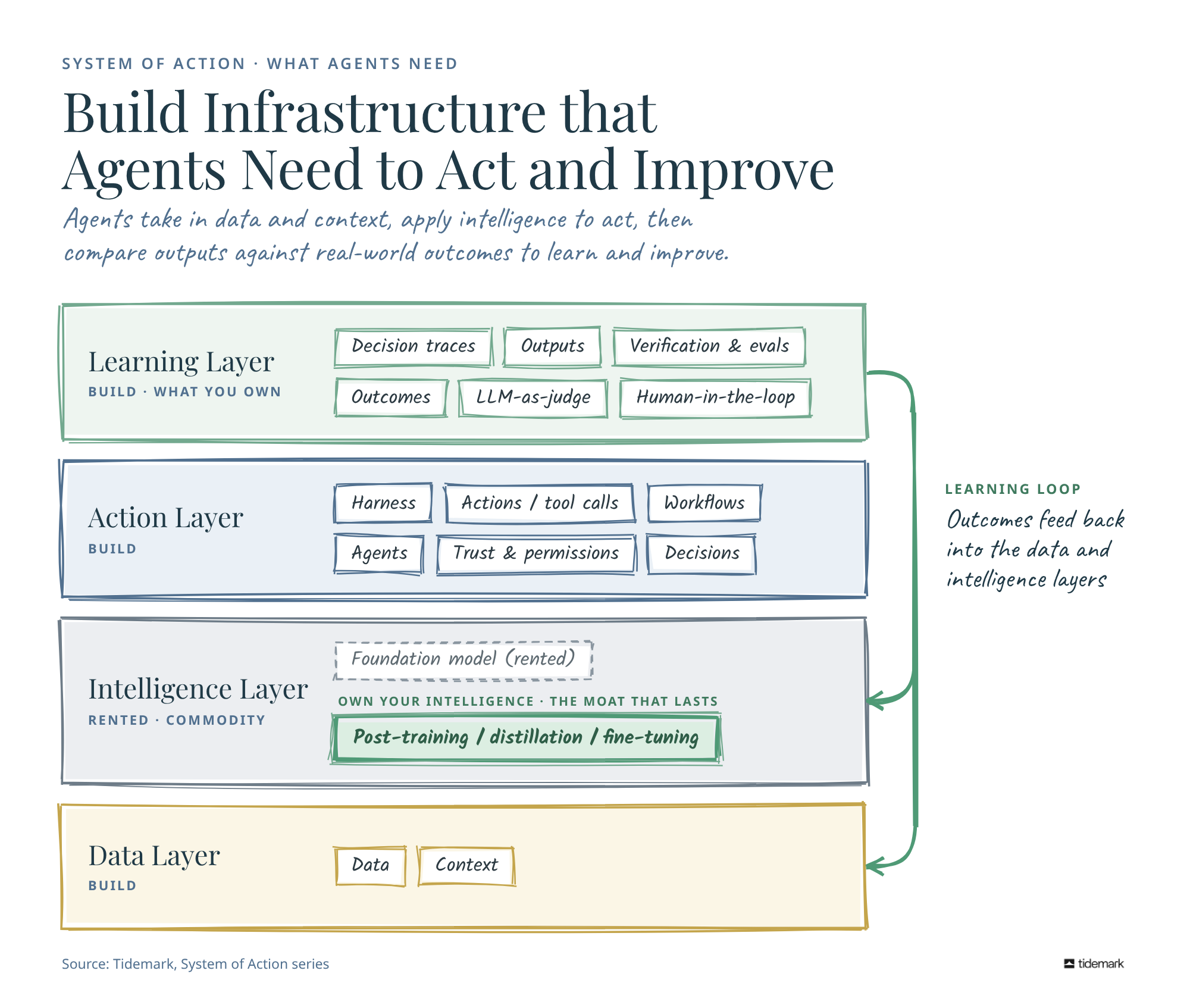
The data, intelligence, action and learning layers that agents need to act & improve

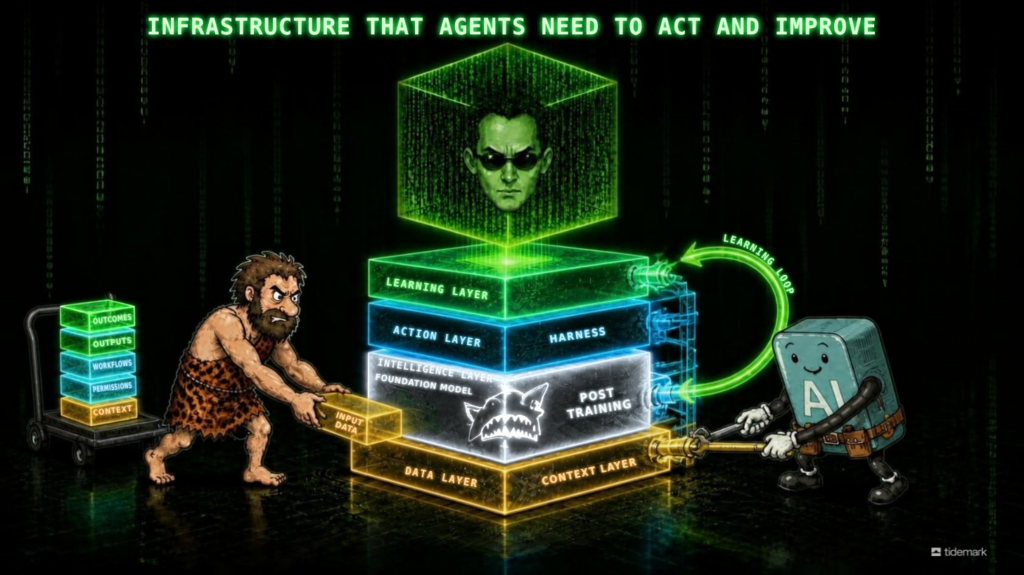
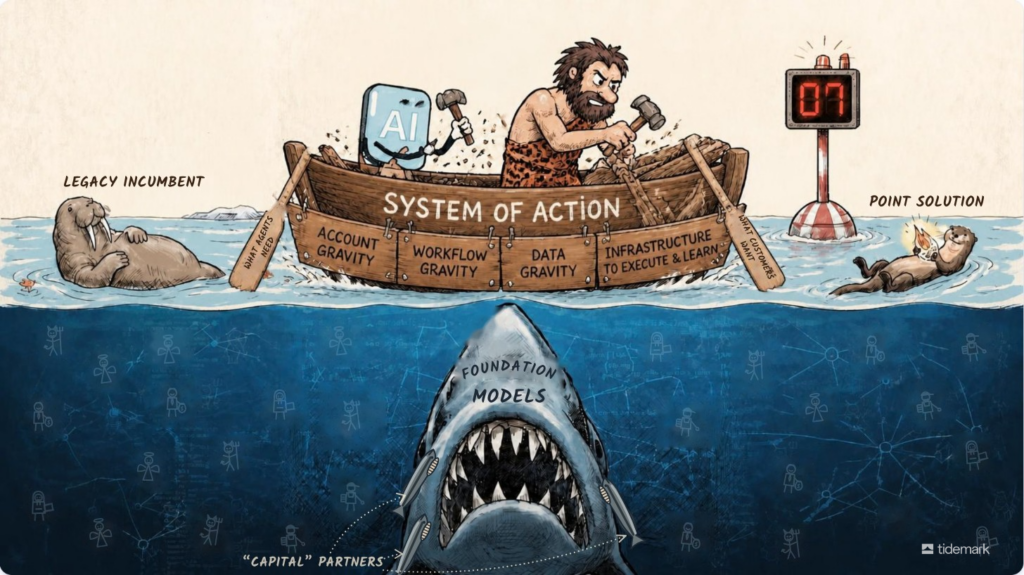
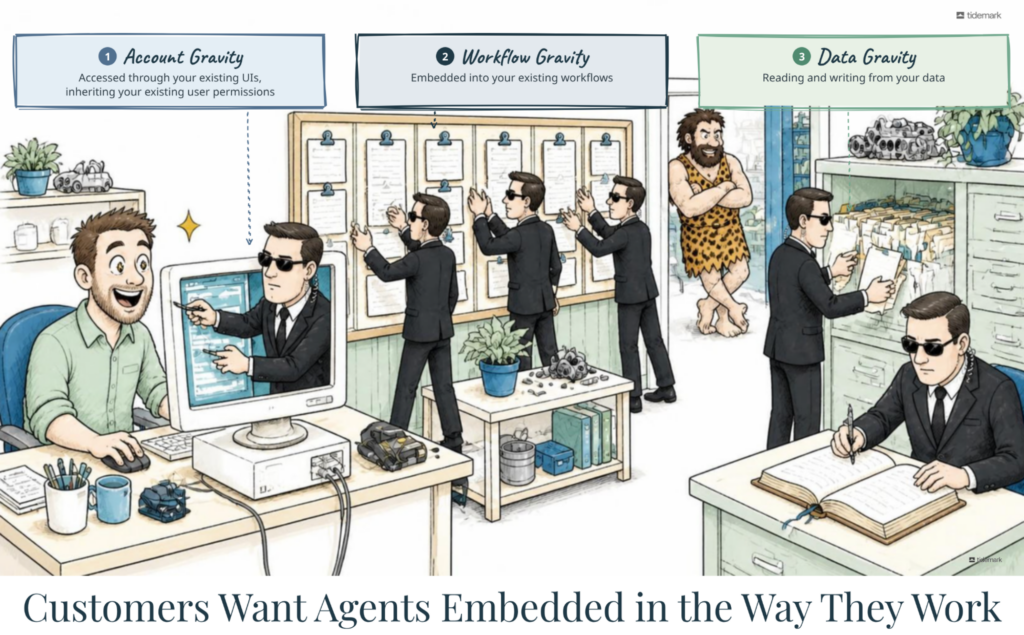
The Control Point gravities also feed the infrastructure that lets agents act and improve.
Agents are non-deterministic. Getting non-deterministic agents to execute predictably and improve over time is both an engineering and an infrastructure problem.
This infrastructure is more than tooling. It’s systems thinking and process design. Even if you use third-party vendors for a harness or post-training, you need to think like an infrastructure company to design how you capture compounding context, build the harness, and create a learning loop that allows agents to execute and get better over time.
This discussion of the infrastructure layer will likely age quickly. But we believe it’s important to consider what is needed in the short term, what might be durable in the longer term, and how it maps to the product moats described in the What Customers Want series (which will likely prove more enduring, even given the pace of AI’s progress).
The Data Layer
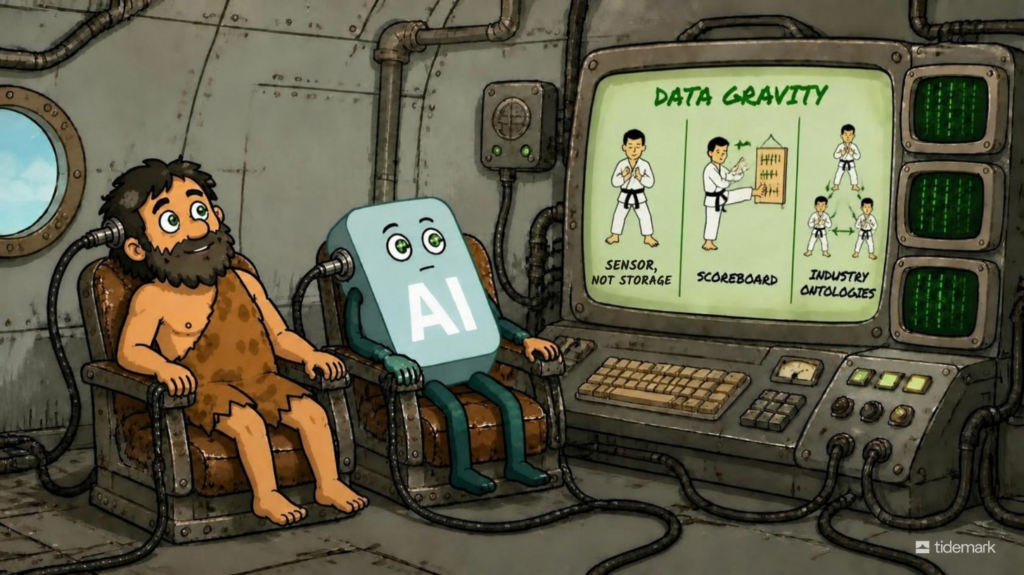
An agent takes in data and context. Context is your data gravity, made legible to an agent. Legibility means more than the static schemas that power CRUD apps. Agents need dynamic context: living ontologies plus the events, exceptions, and judgment calls behind every record. A schema tells an agent what’s true. A living context layer tells it what to do next.
The Intelligence layer
The agent applies intelligence rented from the Foundation models. You rent it, everyone rents it. Differentiation comes from what you feed it and what you teach it. More on that in The Learning Layer below.
The Action layer
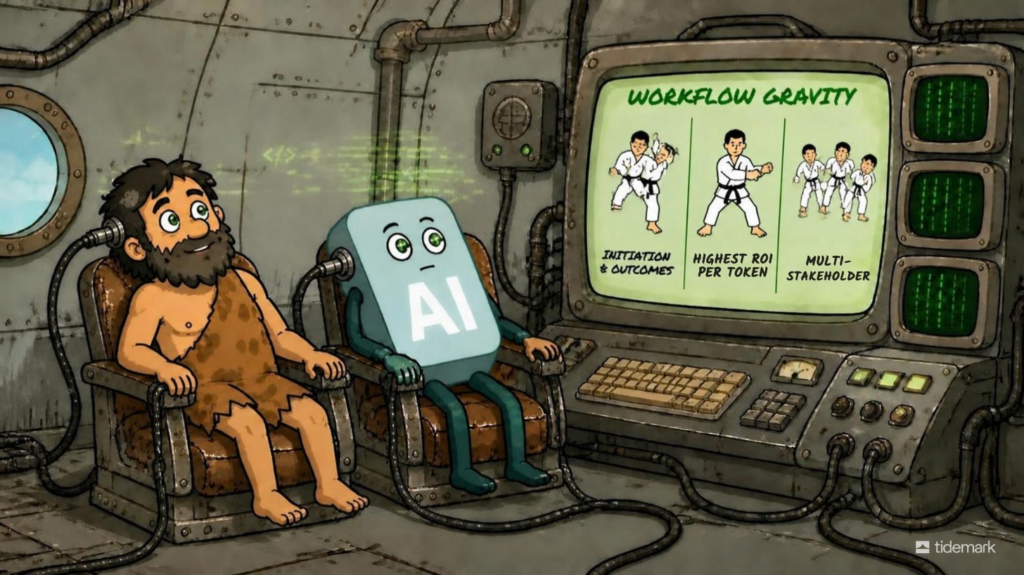
An agent executes inside a harness with the right permissions and produces an output: a decision, an action that triggers a downstream workflow, or the launch of another agent.
The harness is everything wrapped around the model at runtime. It should include:
What context gets assembled and passed in
- Which tools the agent can and can’t call
- What permissions it inherits
- What it’s allowed to do on its own, and where it has to stop and ask
- How failures get caught, retried, and escalated
- What each run costs and how long it takes
The harness makes the agent run the same way on Tuesday as it did on Monday, accurately enough to trust and fast enough to live inside a real workflow.
The harness drives agent performance, so it is strategic in its own right. It’s real engineering, and it is where AI-native companies lead today. It is, however, replicable, and we believe third-party options will become more prevalent over time.
The Learning Layer
The learning layer judges the output, attributes it to the real-world outcome, and feeds that back to improve the agent.
You want outputs and outcomes, plus the trace of how the agent got from one to the other: every step, tool call, and correction along the way. Remember, that’s how you own the scoreboard.
Outcomes may not be sitting there waiting for you. They may be disconnected from the system, or never digitized, or land weeks after the output. Did the collection get paid? Did the loan perform? Did the customer come back? That is why the System of Record is so powerful. When the outcome isn’t instantaneous, it often still gets recorded there.
Keep these outcomes private. The Foundation models can’t train on what they can’t see.
Own Your Intelligence
The learning loop also lets you fine-tune an open-weight model and reduce reliance on expensive frontier models.
The payoff goes beyond cost savings. General foundation models give everyone the same trade-off between cost, speed, and accuracy. Your post-trained model can move the efficient frontier for your vertical.
This is the moat that lasts. An intelligence trained on years of what happened in your industry, and still training, can’t be bought or copied. It can only be outrun, and every day you gain more ground.
A (not so) hot take on costs and margin
Your goal is not just to build a System of Action for your customers. Your goal is also to build a strong and enduring business for you, your employees, and your shareholders. AI is magic, but inference costs on frontier models for long-duration agents are pretty ugly. If applications can’t show reasonable gross margin leverage over time, even the splashiest names will start losing access to investor capital.
Finally, there’s another aspect of infrastructure that has nothing to do with making the agent better. If you sell into a highly regulated market (legal, healthcare, or financial services) or to a Fortune 500 company with a brand that can’t survive a bad headline, your customers want an environment that makes AI safe.
Take our portfolio company OneStream (see its case study in Data Gravity, part of Moats in an AI World).
It provides a controlled environment for its customers’ CIOs.
One of its first AI products is Control Tower, which offers auditability (can you defend the answers and their sources?) and traceability of the interim decisions and calculations. Control Tower doesn’t necessarily make the agent smarter, but it makes the agent something a Fortune 500 CIO can sign off on.