How to Build a System of Action
Building what customers want & what agents need to deliver the promise of agents.

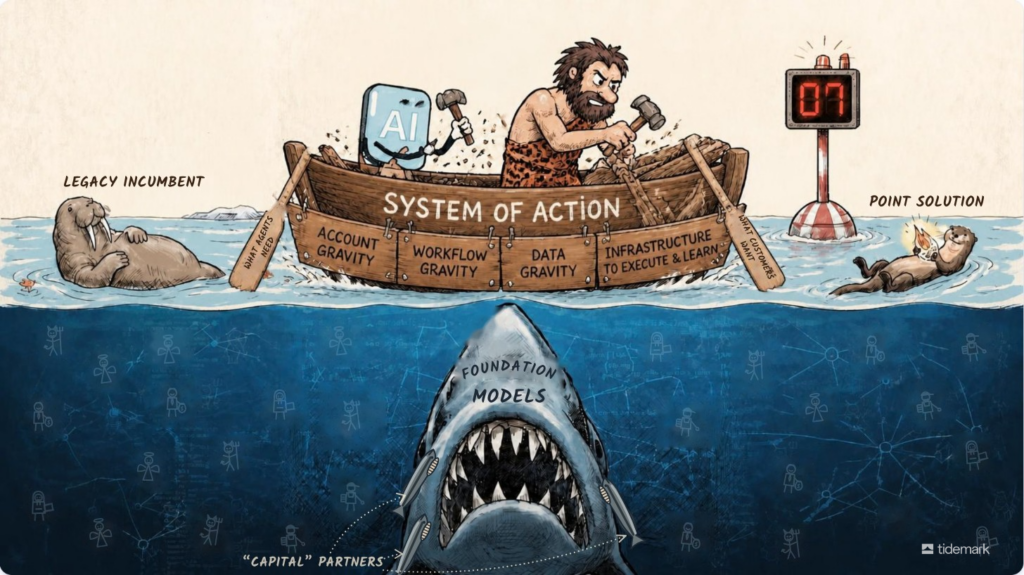
So how do you become the System of Action?
What Customers Want
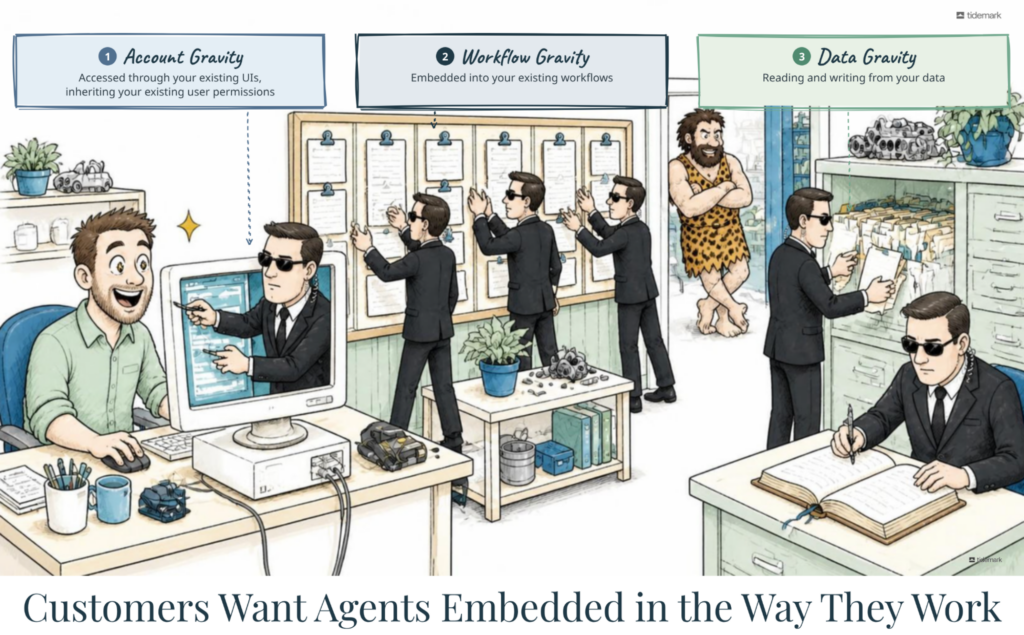
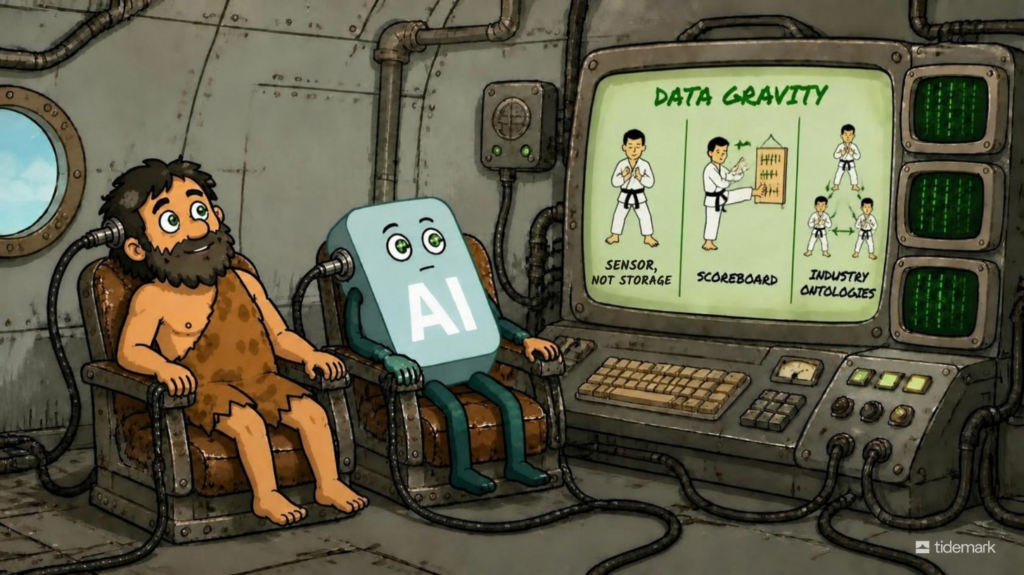
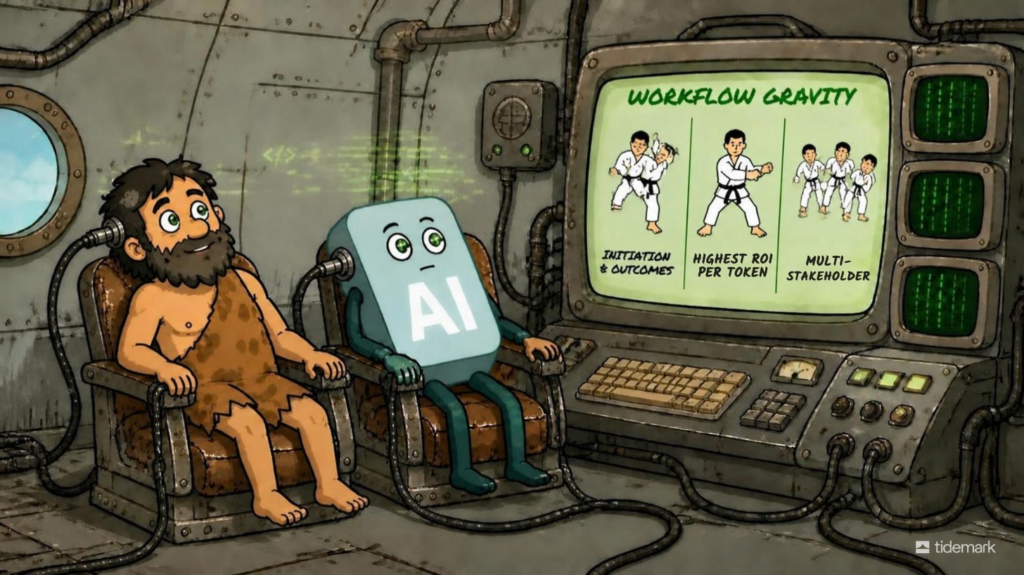
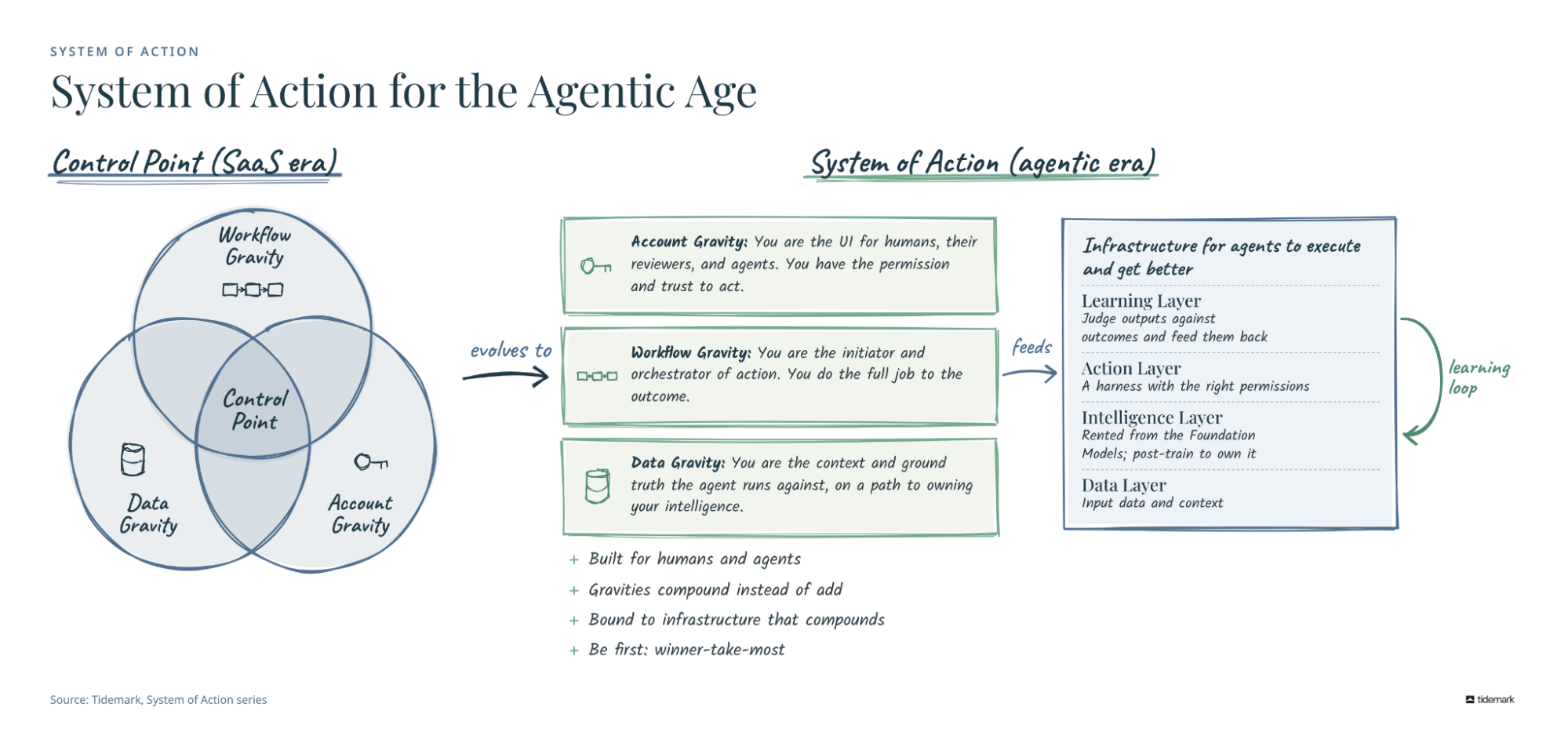
Let’s start with the familiar. Customers want AI where they already work, which means the System of Action runs on the same control point gravities we’ve written about for years: account, workflow, and data.
The key is that control point gravities have to be rebuilt for agents as well as humans. In a System of Action, they aren’t three separate moats; they become an integrated system: Account gravity earns the permission. The permission unlocks the workflow and the data. The workflow generates the outcomes. The outcomes train the intelligence.
What Agents Need to Self-Improve
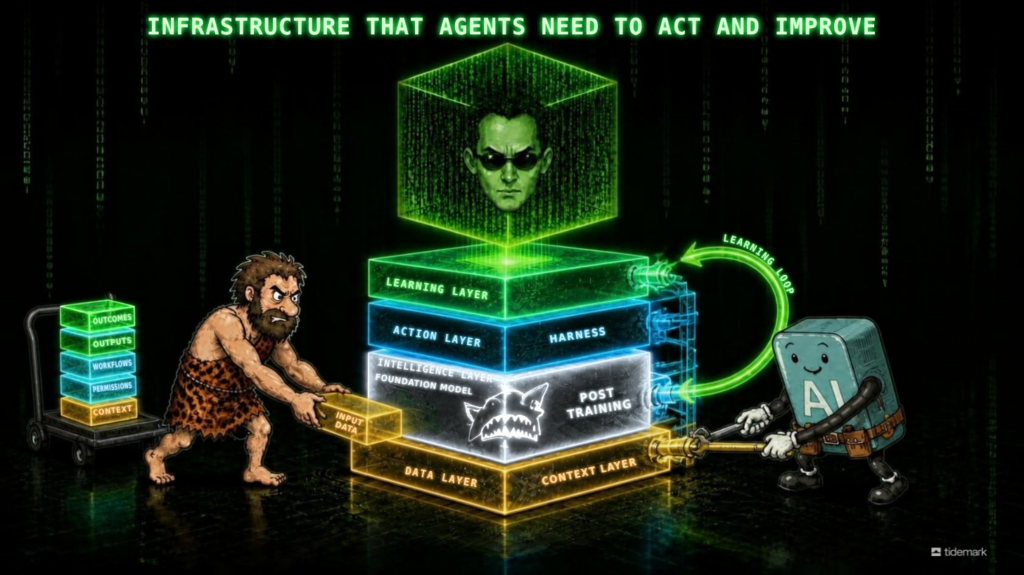
These gravities also feed something new: the infrastructure that lets agents scale and get better over time. This infrastructure is only now becoming available.
Even if you use third-party vendors for a harness or post-training, every application company now needs to think like an infrastructure company. It needs to build the context layer, the harness, and the learning loop that lets agents execute and improve.
We get specific about all three in What Agents Need, and it is harder than it sounds.
No moats? Nonsense.
VC wisdom suggests there are no moats in the age of AI. Just run fast, raise a lot of money, and keep dancing… It’s catchy, and it resonates given the great white shark narrative (the frontier labs and their $100B war chests eating the application layer). It’s also suspiciously self-serving – given VCs’ AUM-fueled private-jet ambitions.
But this logic makes no sense for you as a founder. Why eat glass to build a thin wrapper with limited gross margins, only to have Bending Spoons buy out your pref stack?
You can build moats! By securing what customers want and what agents need, Systems of Action become hard to displace.
In fact, given the compounding nature of the gravities and the underlying infrastructure, startups that build the defining System of Action for their industries will be more dominant than the leaders of the prior era.
The Shot Clock Is Running
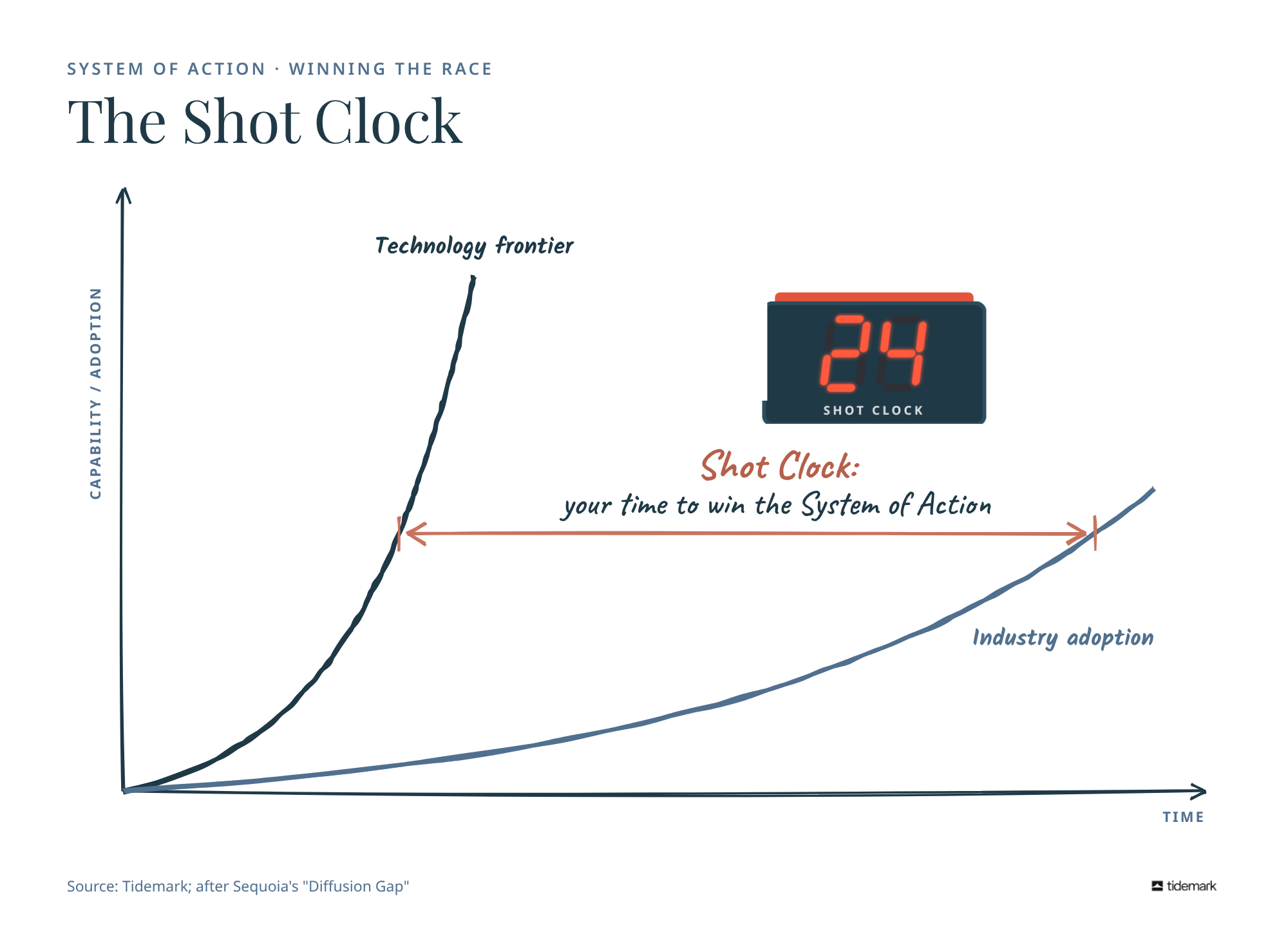
The opportunity is now, but it won’t last long. The technical frontier is moving at a blinding rate, and Industries are adopting AI at different rates. Your “shot clock” is the window between what the technology can do and what your industry has adopted.
Understanding how fast or slow your industry will adopt tells you how much time you have on that clock. It also informs your product focus, brand positioning, funding, and M&A strategy.
For incumbents who hold the control points, the challenge is to lock in their place in the next era of vertical software before the newcomers can catch up. For AI-native newcomers, the challenge is to push industry adoption to the frontier faster than legacy players can respond. No matter where you start, time is limited, and the moment is now.