
 The Long View
The Paths to Multi-Product
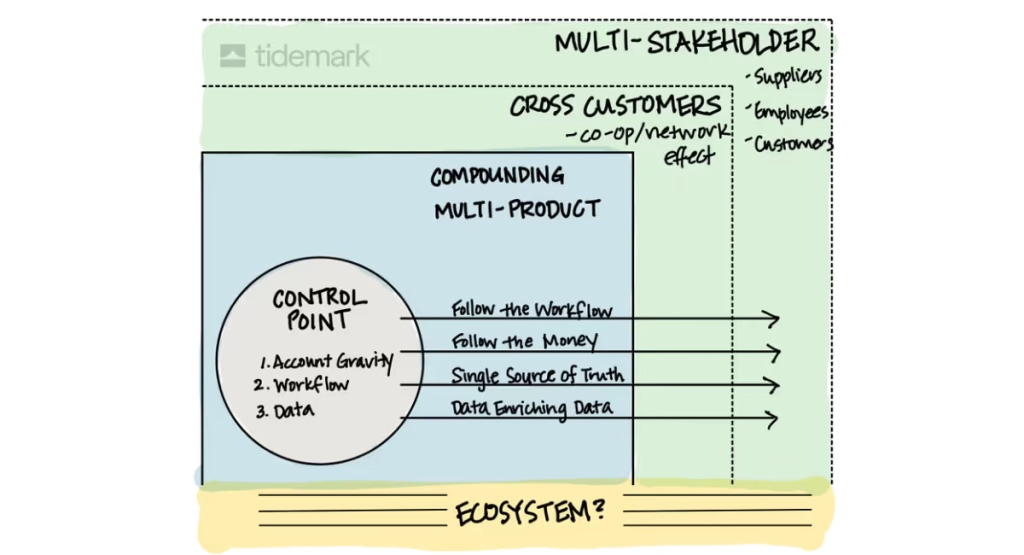
Going multi-product clearly offers a better world for software companies, so why doesn’t every company do it? It can be difficult to reallocate resources and create conviction within the business, but despite the challenges of expanding your product offerings, we see a few paths to success.

Huge thanks to Kevin Salimian and Lone Pine Capital for their data contributions for this series, and to Nick Mehta, Abraham Thomas, Avanish Sahai, and Kevin Haverty for their contributions!
Going multi-product clearly offers a better world for software companies. Adding a second product increases the revenue per customer (duh), which allows you to spend more to acquire that customer, which allows you to grow more quickly and, eventually, increase profitability.
The obviousness of this logic leads to an equally obvious question: why doesn’t every company do it? Despite the clear advantages, relatively few companies are able to pull off the strategy. According to research from Lone Pine Capital, only 25% of the public single-product software companies as of the end of 2016 were able to generate > 20% of revenues from outside of their core offering by the end of 2022.
At Tidemark, we try to open-source our thinking as much as possible to help founders win; however, as investors, we can’t give everything away in public. If you’re an operator or founder, you can request access to the rest of this piece below.


Stay in the Loop
Enter your details and be notified when we publish new articles on The Highpoint.